If the word “mead” brings to mind brawny Vikings or medieval kings clinking oversized mugs of sweet, heavy honey wine, HiveWorks Mead would like to change that image.
The Rohnert Park company is making a lighter, drier and effervescent version of the ancient drink — and now has a taproom where customers can try it.
HiveWorks opened its new tasting room July 15 on State Farm Drive, next to its production facility. The taproom gives the two-year-old company an expanded home as it looks to build its following for session-style meads.
“Our customers have consistently asked for a dedicated place they can hang out and enjoy our mead,” said Alexander Mendoza, HiveWorks’ co-founder, head mead-maker and CEO. “When the perfect spot opened up right next to our production space, everything just clicked. It felt like the exact right time to take this next step.”
HiveWorks Mead Company launches new mead taproom in Rohnert Park. (Gunther Kirsch)
Made by fermenting honey with water and yeast, mead has long occupied a niche corner of the alcoholic beverage world. But producers are increasingly experimenting with sparkling, fruit-infused and lower-alcohol versions aimed at drinkers accustomed to craft beer, cider and wine.
The global mead beverage market is projected to reach $720.93 million in 2026 and nearly $1.89 billion by 2036, growing at an annual rate of 10.1%, according to Future Market Insights.
“People are definitely looking for craft alternatives to traditional beer and wine, and we feel our mead hits the mark,” Mendoza said. “It’s genuinely delicious and very approachable for all palates.”
From home brewing to mead
Mendoza and co-founder Sean Duckworth, both Sebastopol natives, met in second grade. Years later, while attending Sonoma State University, the two began making beer and cider in the closet of their small apartment. Their friend Julian Frank was experimenting with mead.
“We just loved the process of mead-making and found the history really interesting,” Duckworth said in a 2024 interview with The Press Democrat. “The fermentation process is really complex, and you have to use a lot of science and math to get the results you want.”
The trio eventually set out to create something different: a session-style mead that would be dry, carbonated and lower in alcohol than many traditional versions. Since founding HiveWorks in 2024, Frank has left the company while Duckworth remains a shareholder and Mendoza the chief executive.
HiveWorks uses Oregon honey and filters its mead to prevent re-fermentation in the can. The mead is produced without sulfites or preservatives — selling points Mendoza and Duckworth have banked on.
“It checks a lot of boxes for modern consumers,” Mendoza said.
HiveWorks Mead Company launches new mead taproom in Rohnert Park. (Gunther Kirsch)
HiveWorks currently offers several meads, including its flagship Skyborne, a dry session mead; Crimson Queen, made with blueberries; and Emerald Swarm, a dry-hopped version. Seasonal and experimental releases rotate through the line-up.
“Opening a taproom is a dream come true,” Mendoza said. “We’re so excited to finally have a brick-and-mortar home to share with the local community, and we can’t wait to welcome our neighbours and the supporters who have championed us from the start.”
The details
HiveWorks plans to celebrate the new taproom with a grand-opening party from noon to 9 p.m. Sept. 19, featuring live music, Dino’s Greek Food Truck and a new mead release.
The taproom is open 3-9 p.m. Thursday, noon-9 p.m. Friday and Saturday, and noon-6 p.m. Sunday.
HiveWorks Mead Company: 5701 State Farm Drive, Suite 116, Rohnert Park; 707-241-3143; hiveworksmead.com
A budding Richmond business owner is hoping people “get SideTrack’d” and check out his debut mead offerings.
He may look familiar: Steven Phillips, the onetime taproom manager and current member of the production team at East Brother Beer Co., is launching his own project, SideTrack Mead, out of space rented from his employer. Eventually, he hopes to open his own local taproom, but first people need to check out his mead.
Photos contributed
SideTrack Mead specializes in producing sessionable meads (~7 percent abv, instead of the standard 10-14 percent). “Mead or honey wine seems scarce on the market and I had been home brewing it for years since there are no commercial examples to pick up,” said Phillips.
The one-time homebrewer enters the market with some serious props; he’s won multiple prestigious awards, including a gold at Mazer Cup International, the largest mead competition.
SideTrack offers two options for purchase—the Hidromiel De Jamaica – Hibiscus mead at 7 percent abv in kegs and cans and the Orange Blossom Traditional – honey only at 7.5 percent abv, which is solely available in kegs for now. Phillips plans to launch more flavors.
The new meadery has landed some retail partners, including the Point Richmond Market and Roma Caffé & Bar in Richmond and Ale Tales in Albany. SideTrack also offers shipping to about 40 states via Vinoshipper on its webstore.
The Richmond business owner said he balances meads at a lower alcohol volume for less conditioning time, which also equated to less fermentable sugars and less honey cost, making the cost a lot lower. Phillips said he also works with a local beekeeper in Galt, Calif. to provide his bulk honey to keep things cheaper without a middleman. SideTrack’s mead runs $18 for a four-pack, which Phillips said is among the lowest priced mead in the market.
The Lord of the Rings and Game of Thrones sparked an interest in the alcoholic brew enjoyed by thirsty knights
More than 100 meaderies have opened in the US in the past two years – but making the medieval honey wine remains 8 times more expensive than beer
Danielle Busch admits it wasn’t just the failed attempt at making wine at home that encouraged her and her husband to try making mead. “He was watching Vikings on the History Channel at the time, and he’d played Dungeons & Dragons a lot before that,” chuckles the co-founder of California-based Batch Mead. “So, yes, he had heard of mead, but, like many people, he wasn’t quite sure what it was.”
Indeed, if The Lord of the Rings and Game of Thrones thrust mead into the spotlight – “I welcome you to our fires and offer you meat and mead in honour of our friendship,” as Bran Stark declares in an episode of the latter – that doesn’t mean viewers had much of an idea what it was either. It was just what was drunk in any series or film that featured men wearing tights or a vaguely medieval setting.
“If people know anything about it, they tend to incorrectly think of mead as being very sweet and syrupy,” says Busch, who, somehow inevitably, is busy putting together an order for a forthcoming 15th century recreationalist event. You know, when people take period dressing – and drinking – a little too seriously.
Actually, mead is neither saccharine nor treacly but can be light, dry, rich, even savoury. It is, to be sure, ancient, with the kind of heritage any marketing manager would play up.
Actually, mead is neither saccharine nor treacly but can be light, dry, rich, even savoury. It is, to be sure, ancient, with the kind of heritage any marketing manager would play up.
The tipple predates beer and wine, originating by chance, it is thought, in China’s Henan province in the seventh millennium BC. Just about every ancient culture would, in time, have its take on mead, which helps explain why it turns up in the writings of Aristotle and in the Old English saga of Scandinavian warriors and monsters, Beowulf.
What’s important is to encourage people to look at mead afresh, as a contemporary drink, and not as the ‘ye olde’ mead that I think makes many people decide it’s not for them before they’ve tried it. They don’t get home each evening and pillage their neighbour
Eric Lui, director of Citibrew. Picture: Jake S. Thomas
At its simplest and most authentic, mead is made from three key ingredients: water, cultured yeast and fermentable sugar in the form of honey – and, in fact, “honeymoon” takes its name from this, as it was traditionally drunk by Nordic newlyweds to incite baby-making levels of amorousness. It is sometimes called honey wine, though that seems to confuse drinkers even more …
But the Busches – who have seen business double year on year since they opened in 2019 – have not been alone in their curiosity about a drink that once spanned the world and then just disappeared, in part because the 17th century international trade in sugar from the West Indies dampened demand for honey, but also because brewing beer and distilling spirits became much more widespread (and neither involved the potential of being stung while collecting ingredients).
Like an over-pressurised beer barrel, the number of mead makers has exploded over the past few years. According to Eric Lui Wang-hong, director of Citibrew, Hong Kong’s first meadery (yes, that’s what they call a mead brewery), the pandemic made beer production especially complicated – not least because the international trade in hops was seriously curtailed – encouraging start-ups to ponder other options. Since Hong Kong has its own apiaries, “the main ingredient was already here”, says Lui. It was still a leap of faith, however, as, “I knew exactly zero about mead at the time.”
Other entrepreneurial meadists were at work, too. Justin Herson, co-founder of Singapore’s Lion City Meadery, says he first heard of the brew as a child reading Norse mythology, which promises dead warriors arriving in Valhalla a celestial draught served by beautiful maidens. Herson had assumed that mead had long since evolved into something else – if the drink ever existed at all – and, like the Busches, eventually came to it through his business partner’s experiments in home brewing.
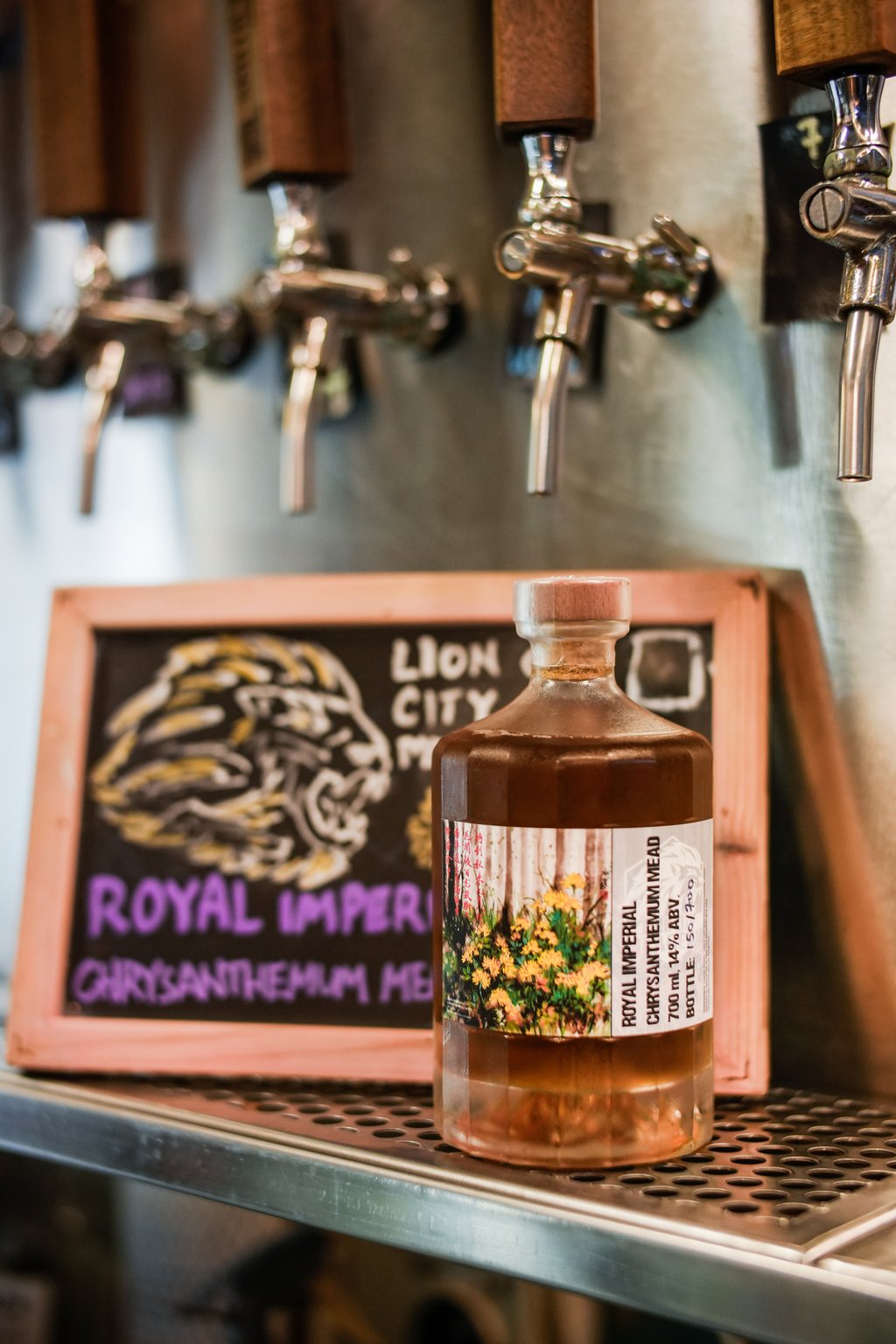
Royal Imperial Chrysanthemum Mead from Singapore’s Lion City Meadery. Photo: Joel Lim Photography
Mead, like cider and craft beer before it, “seems to have become a focal point for a number of home brewers who have been making it for years in their own silos, as part of their own social networks”, says Herson. He has reached out to a few of them and some co-branded meads are now in the pipeline for next year.
No doubt part of the appeal for these home brewers is the scope for experimentation. If most beers fall within a certain range of bitterness and colour, one of the great selling points of mead is its diversity. Not only is there a huge variety of honeys, each with their own flavour profiles reflecting the terroir of flora from which bees have taken pollen – be that wildflower honey from the United States or plum honey from Japan – but mead’s honey base is then endlessly customisable with other ingredients.
These typically include blends of fresh fruits and spices, maybe flower petals or sea salt. Some producers go as far as offering a garlic or a peanut-butter-and-jelly mead (Britain-based Hive Mind Meadery even offers a small batch, bottle-conditioned baked strawberry cheesecake variety).
The endless flow of novelty styles keeps the market fresh, helps drive sales and is even seeing mead used as a cocktail ingredient. Expect a mead-arita in your favourite bar soon, with the staff waxing lyrical about the revival of melomels and metheglins, cysers, acerglyns, rhodomels and braggots, among the old, more esoteric, wonderfully named versions of mead that really do sound like they belong in a flagon held firmly in Daemon Targaryen’s hand.
What’s important is to encourage people to look at mead afresh, as a contemporary drink, and not as the ‘ye olde’ mead … many people decide it’s not for them before they’ve tried it. They don’t get home each evening and pillage their neighbour
Kit Newell, Hive Mead
Lui also sees the potential for mead to be both mass market – he produces a sparkling mead with a low alcohol content of 4.5 per cent, “which is more familiar, like a cider” – and upmarket, where more traditional wine-style meads with an alcohol content of 10 per cent or more are made with unusual ingredients and positioned as luxury products. Citibrew is producing just such a mead for the Four Seasons Hong Kong from September, and is in talks with the Hong Kong Jockey Club for other varieties. “It’s telling,” says Lui, “that even big hotel groups are looking for something different to offer in their bars now.”
Since the flavour profile of ingredients changes year to year, Citibrew also plans to launch a line of meads labelled with year of production, much like a fine wine.
Hive Mind has the same idea, producing both cans of various fruit-infused sparkling meads, but also, for example, a bottled mead that is oak whiskey-barrel-aged, and another using honey from Zambia, which it sells to Michelin-starred restaurants.
“The great thing about mead is that it can be something to everyone,” says Kit Newell, who co-founded Hive Mead with his brother, Matt, a beekeeper who was looking for something to do with the vast amount of honey he produced. “What’s important is to encourage people to look at mead afresh, as a contemporary drink, and not as the ‘ye olde’ mead that I think makes many people decide it’s not for them before they’ve tried it. They don’t get home each evening and pillage their neighbour.”
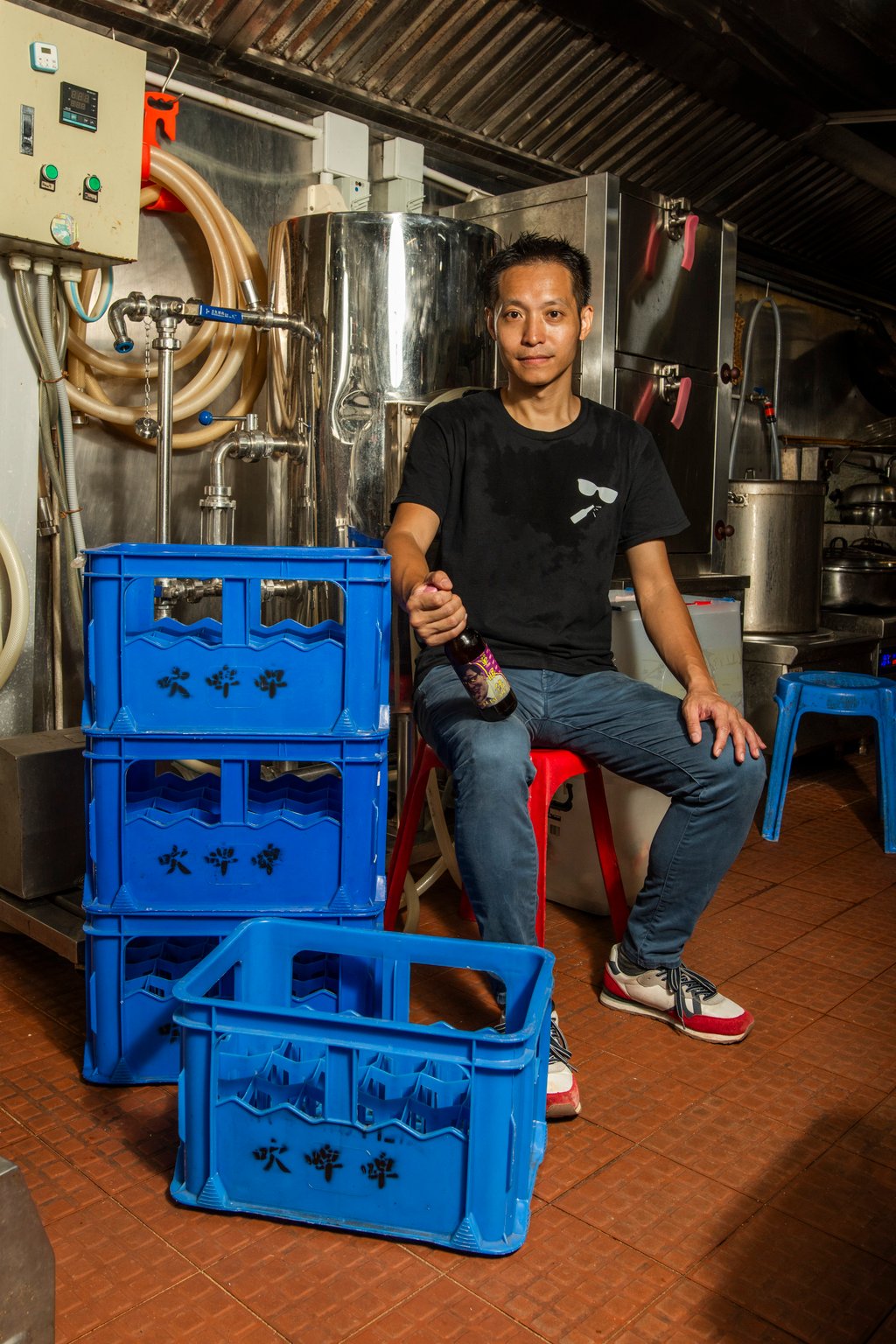
David Leung of Hong Kong Whistle. Picture: Jake S. Thomas
Meanwhile, another British meadery, Biddenden – perhaps with a nod to Thor and Odin – labels its product as “nectar of the gods”, positioning its Special Mead firmly as an alternative to dessert wine, to be sipped after a meal with your cheese course.
As marketing manager Anne Jennings stresses, “It may have a screw cap but it comes in a wine-style bottle, with a wine-style label and doesn’t look out of place on the dinner table. In fact, it looks a bit more special than your average bottle of wine.”
The more health-conscious – and as studies suggest, buttoned-up younger generations – have been a boon to mead, riding the wave for no- and low-alcohol drinks. While the general aura around honey as a natural product helps to create a positive image around mead, to say nothing of antioxidants and nutrients, the drink is also free of gluten, sulphates and other potential nasties.
It is also what many in the fledgling mead industry like to call “easy drinking”, as fashionable but more palatable than many craft beers. “The appeal to Gen Z and Gen Y is a big factor [in mead’s revival],” says Lui. “They don’t want a big imperial IPA. After all, even a craft beer is still a beer; there’s still that hoppy bitterness and, sometimes, the bloatedness that comes with drinking it.”
Instead, mead becomes, as Herson describes it, “a nice middle ground between beer and wine”, a long drink option for those who aren’t so keen on either. Additionally, despite Lion City Meadery’s “very masculine branding”, it has proved surprisingly popular among women.
“People sometimes ask if there’s any alcohol in mead when they first try it because it can taste more like a soda. It’s not so ethanol-forward,” he says, adding that even a mead with very high alcohol content – 40 to 60 per cent – can taste like a low-alcohol drink. “Naturally, they tend to have a different opinion once they’ve drunk three bottles of it.”
By then, of course, the other appeals of mead have likely been forgotten, too. Its perceived environmental benefits, for example: with the global bee population in decline, anything that encourages natural honey production, as opposed to the industrially produced “fake” kind that might be cut with corn syrup, is a boon. Hive Mind, for example, now operates 180 of its own hives and counting.
“Like so many simple dishes,” says Herson, “mead is very easy to make but very hard to make really well.”
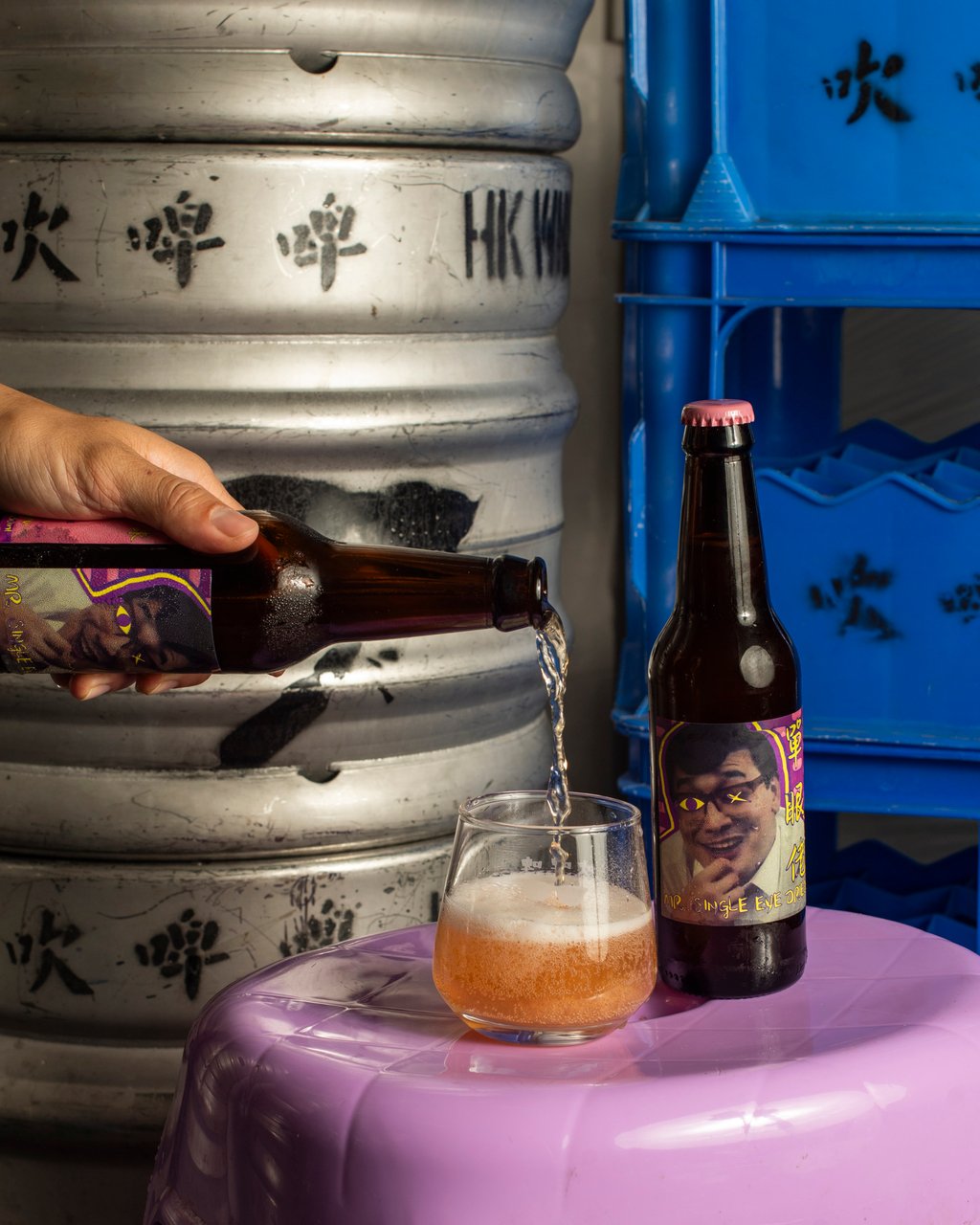
Mr Single Eye Dried Plum Mead from Hong Kong Whistle. Picture: Jake S. Thomas
While Lui jokes that there are still enough wealthy people in Hong Kong who can afford it, mead is expensive to make. Honey is pretty much the priciest form of sugar around, and fresh fruits are not a cheap ingredient either, making mead some four times more expensive than wine to produce, and eight times more than beer. The cost will keep mead out of reach for conglomerates for the time being.
It is time-consuming to make, too, each batch taking two to three months. Then there is the option of ageing, which only adds to production costs and cash-flow problems. In Singapore, for example, customs insist on meaderies having a distilling licence, even though no distillation is involved in mead’s production.
And then there’s selling it. “There still needs to be a lot more education to give the public a better understanding of mead,” says Busch. But, she stresses, educating distributors and retailers – especially those accustomed to high-margin products such as lager – is the first problem.
“Mead doesn’t fit neatly into a category of drink. It’s its own category really,” she says. “That means there’s confusion about how to market it, or the decision gets made to wait until the mead market is better established.”
“That’s why I don’t see mead as some sudden craze in the way that gin was,” says Herson – even if, he notes, over the past two years alone, seven meaderies have opened in Japan and a hundred in the US.
While other drinks swing in and out of style, mead hasn’t been in fashion for 400 years, so its comeback now may be on firmer ground. One study estimates the global mead market will be worth US$1.4 billion by 2032. “I see mead having a long, slow and steady growth trajectory,” says Herson, “but one that’s definitely upwards.”
David Leung Ka-tai, a beer brewer and founder of boutique brewery Hong Kong Whistle, makes a dried-plum mead, a nod to traditional Cantonese ingredients and plum’s thirst-quenching associations. Despite being pulled into mead’s orbit, he says, “Mead isn’t something you’re going to find in your 7-Eleven too soon.