Showing posts with label Minnesota. Show all posts

Thursday, 30 May 2024

Bumbling Fools Mead In Minneapolis

From heavytable.com

People have been drinking mead nearly as long as they’ve been harvesting honey. While mead has a storied history, it’s not nearly as popular as beer and wine, despite some similarities. But that hasn’t stopped mead makers from pursuing their passions in a competitive beverage marketplace. The wine-like drink has always had an appeal to those who want something a little bit different, and that whimsical spirit drives Noah Stein and Skot Rieffer, who cofounded and opened Bumbling Fools meadery in the Como neighborhood of Minneapolis, beginning manufacturing in late 2021 and slowly expanding their taproom since. They take their mead making seriously, of course, but their mead names often poke fun at themselves and there is a playful spirit throughout, from the cartoony bees everywhere to the life size cutout of their first customer.

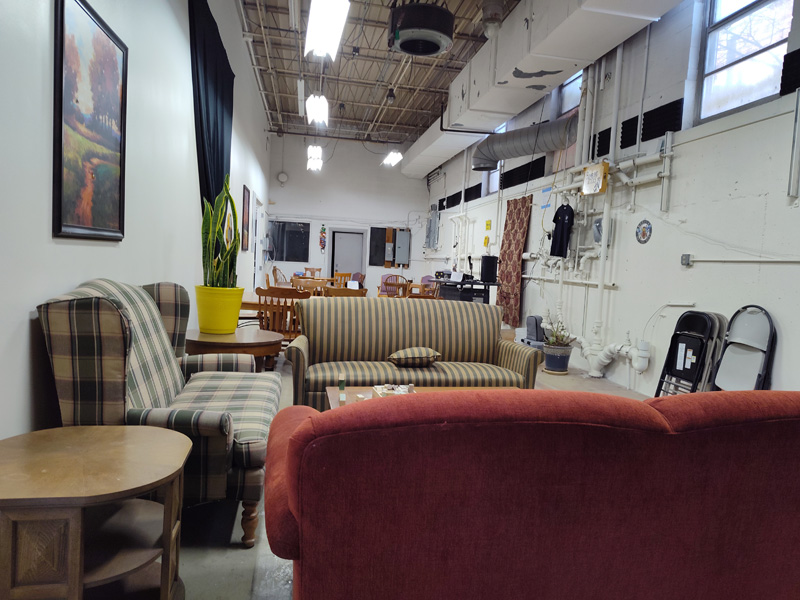
The meadery and taproom are something of a hidden gem, located at the corner of East Hennepin and 21st Avenue SE but lacking true signage on the busy Hennepin Avenue. The complex of formerly industrial buildings are primarily artist studios. This makes a trip to Bumbling Fools an adventure itself. There are two entrances to the building, both with wandering hallways that are colorfully adorned with pointing bee signs to get you to your destination. Once there, you’ll find a large Mead Hall event room and a small bar around the corner that fits the artist studio vibe. Reclaimed furniture gives a cozy and one-of-a-kind atmosphere with ample room to sip your beverage as you socialize, read a book or, on Thursdays, play trivia. Art shows take place the last Friday of each month in the building.

HEAVY TABLE: What is your origin story?

NOAH STEIN: About 8 years ago Skot and I happened to be making mead for the first time, separately and independently. We exchanged notes and bottles. Many years later, we said, “We should do that again but bigger this time.” So we made a bigger batch and different flavors and had some fun. We made some more and made some more. We were starting to do tasting parties…

The Massachusetts Renaissance Festival was doing their first mail-in mead homebrewing event, bringing in wine and mead judges from Europe. “They don’t know us and they know the game: they’ll be able to tell us why our mead is so terrible and what we can do to fix it.” Then the pandemic happened. I left my job. Skot left his job. Later that week the results came in and we won. Our traditional mead won Best In Show and Best Traditional. Our Bee Sting (jalapeño lime) won Best Experimental and third place overall. We looked at each other: “Maybe we’re doing something right.”

I’m probably not giving myself enough credit. Homebrewing is an odd hobby because there is frequently nothing to do; you’re waiting for it to age, ferment or whatever. So I spent a lot of that time reading and researching the science behind yeast and the history of wine … Considering that we both had more free time on our hands, we found the [small bar room] space across the hall. We moved in and started brewing. We got our license about two and a half years ago. We opened the bar about a year ago.

We started there. The landlords were very good to us. Due to the nature of the product, we cannot make a dollar off this for at least nine months.

Originally we were all distribution. We could sell bottles ourselves but we couldn’t pour drinks and we weren’t set up to do tastings. But after the first year we noticed this building does 4-5 art shows a year and is involved with Art A Whirl. On those days the building was getting great traffic. We set up a little table and did tastings in the hallway and it was very popular. Last year, in February, we decided, “Let’s get in on this.” 

The front room was storage and office and we shoved everything into the back, gave it a facelift, and turned it into a tasting bar and we were open for one of the art shows. It was massively popular and it was great. Shortly thereafter we realized that, because the majority of the honey we use comes from local Minnesota growers, we count as a farm winery, which means we can serve in the space where we manufacture. So we leaned into it and opened as a proper bar.

HT: How big a change has the taproom been for the business plan? You’re now a bartender?

STEIN: Right. It changed pretty quickly, going from all distribution to doing it as retail, essentially. Once we saw the potential we jumped right in. The profit is much larger. You are essentially giving up your Thursday and Friday and Saturday nights for the rest of time. [Laughs.] But eventually we’ll have an actual staff and can take the occasional weekend off.

Right away we started getting regulars. Trivia has been a big deal. We see people coming back every week and we see new people that haven’t been here before. And people see our sign and wander in and stay for trivia for a couple hours. It’s baby steps, but they’re all forward. It’s a comfortable place right now.

HT: It’s a bit of a stereotype, but I associate mead with Renaissance fairs. Do you have a background in that scene or do you play off that association?

STEIN: It’s an odd but significant section of the market… I do work at the Ren Fair. My sister owns a sewing shop so I’m there several weekends out of the year, but the mead at the Renaissance Festival is through J. Bird Wines and it always has been. White Bear Meadery are the Viking bar with wolf pelts and Viking memorabilia and their mead is named after Norse stuff.

We weren’t interested in fighting over [branding]. Mead is heavily associated with Vikings. It features pretty heavily in their stories but literally everywhere in the world that had honeybees had mead – even if they called it different things in Greek, Danish and Swedish, in Africa – that’s one of the things we try to recognize and play to… We make the Egyptian mead. We’re working on something approximately Scottish. The Bee Sting with jalapeño and lime. We like to get weird and experimental.

HT: How do you pick what is on tap at a given moment?

STEIN: The Traditional, The Featherweight, and the Two Ravens are always available. The Featherweight is probably our most popular. The Traditional is our solid, classic mead that’s very popular. Two Ravens is my favorite. It was one of the first flavored meads we’d done, so we’d had a chance to really dial in the recipe. 

Aside from that, we did the Queen’s Kiss for the first time last year. When we ran out people were sad, so we made some more. The Caramel Apple is new. Froop? We did it on a whim and it was well received, so I had to turn around and make more. We have a board out there where we ask people for flavor suggestions. We just talk with people and come up with ideas. I have a book of old world mead ideas I flip through sometimes.

HT: You also do custom mead. Is that a sizable part of your business or more special events?

STEIN: [There is a cutout of Mark in the bar.] Mark doesn’t work here. He is one of our first patrons. We were at a party and he handed me a body of New Glarus raspberry sour and said, “I want this, but I want it to be mead and blackberries.” So I took the bottle home and did some actual research (not just drinking it). Then I asked him how sweet, how sour, things like that. A week or two later he shows up at my door with 30 pounds of frozen blackberries: “I want however much this will make,” which ended up being about 11 gallons.
I want to get into more commissioned meads for weddings or big events. A wedding is one of the few big parties you know enough in advance to start and finish a mead.

The unspoken thing is if you order 5-10 gallons for your wedding reception I’m going to throw in a case of bottles for the couple, each with a tag: 1 month, 6 months, 1 year. These are your anniversary meads. They will keep better than the frozen top of a cake which isn’t meant to be frozen. Plus, the etymology of honeymoon is giving a couple enough mead to last one month.

HT: Do you find that most people who come in understand what mead is?

STEIN: It’s about 50/50.

It’s usually 3 answers:

  1. I’ve never had mead.
  2. I had it at the Renaissance Festival.
  3. Or I homebrew mead.

Honestly, it’s one of our big hurdles: getting people to bite and walk in the door. Mead is coming back a little bit but it’s still unknown. And what people do know about it from past experiences have been some dusty bottles of Chaucer’s sitting on the liquor store shelf for who knows how long or at the Renaissance Festival, which is intensely sweet and very different from what we do here. Our mead is much more like a dry white wine.

When people that have done some homebrewing come in, it’s a lot of fun to talk shop. There’s a lot of people in the world who have a little carboy sitting in the back of their coat closet quietly aging.

HT: How do you guide those first-time visitors?

STEIN: We usually start with The Traditional as an introduction. Beyond that we ask, “Do you like dry or sweet?” We have a flight. But for the most part, if people walk in our door, they are at least a little interested.

HT: Do you get foot traffic versus people seeking you out?

STEIN: More than you would think. We relied on word of mouth and it took us 2-3 months to put a sign outside. When we put a sandwich board outside, number of people took a chance on the long, weird hallway. There is a lot of walking traffic in this neighborhood: people who live 2-3 blocks away and never knew this place was here.

HT: What is your elevator pitch on how you are different than other meaderies?

STEIN: There are like 3 other meaderies in town and a couple others in Minnesota. What makes us different is that ours is a dry wine. We’re a little more accessible in Minneapolis. (The next closest is White Bear Meadery.) If we have a thing, it’s that we love bees and sustainability. All the furniture in this room came from the ReStore. And as many of our ingredients as we can [source] come from local communities. The vast majority of our honey comes from Stillwater, Jim’s Bees and Honey.

We try to be your very local mead haunt. We’re pretty casual about everything.

HT: How do you weigh experimental versus traditional?

STEIN: That’s one of our taglines that we toss around. Bumbling Fools: traditional and clever. I feel like we would be doing a disservice to ourselves just to focus on the tradition. A lot of homebrewers like to do wild ferments, open tank stuff. When we’re doing it commercially, we need a certain reproducibility. We make traditional recipes with modern practices. There is a lot of niche science with fermentation between chemistry and biology. We can get weird and experiment.

HT: Do you have a timeline for building out the taproom?

STEIN: We don’t want to go for classy or too far out there, but not full-on Cottagecore. It will probably look similar to what it is now but with new stairs, a lift, a wall, a stage, a bigger bar…and this old, stained floor.

Bumbling Fools Mead, 2010 East Hennepin Avenue #11-106, Minneapolis, THU 4-10pm, SAT 2-8pm, MON-WED, FRI, SUN CLOSED

https://heavytable.com/bumbling-fools-mead-in-minneapolis/ 

Tuesday, 10 August 2021

Sugar Creek Vineyard & Meadery: Quality over quantity (Minnesota USA)

From fillmorecountyjournal.com

A pair of brothers, Bryan and Kevin Logue, have embarked on a new business venture in rural Fountain, and they recently gave an interview to introduce their business to the community.  Sugar Creek Vineyard and Meadery has been open since the spring of this year, and the brothers say that it’s a case of “so far, so good.”  

As a small family-owned business, the Logue brothers wear many hats in their operation, and they rely on help from their families as well.  Although both brothers pitch in on wine-making, Kevin tends to specialize on the care of the vines and growing, Bryan handles most of the marketing and sales.  

Kevin and Bryan enjoying the fruits of their labour. Photo by Rich Wicks


Kevin noted that the vineyard includes several varieties of grapes that are hearty enough to withstand the harsh Minnesota winters.  Currently, the vineyard includes Itasca, Frontenac Blanc, Breanna, and Prairie Star grape varieties.  Kevin noted that grape growers have to be constantly vigilant for a number of threats to the crop.  When the vines are young, grazing deer are a significant concern.  As the vines get older, fungus becomes more of a worry.  And during harvest time, birds become a pesky problem, as they attempt to steal the ripening grapes.

Both Bryan and Kevin shared that their business is a lot of hard work.  Kevin explained, “You’re got to really enjoy working outside.  Most of the work happens in the vineyard, it doesn’t happen in the winery.  Things in the winery can always wait, but things in the vineyard can’t.”  He said the busiest time is during harvest, and added, “When certain varieties get ripe, you’ve got a window to pick them.  You’ve got to get them in.  And once you get them off the vine, unless you have a lot of refrigeration, you’ve got to get them crushed and stemmed and pressed, and you’ve got to start the fermentation process really quick.”

For those not familiar with the term “mead,” it refers to wines that have honey as a significant ingredient.  Bryan explained that he and Kevin have worked hard to avoid a heavy, sweet honey flavour in their meads.  Instead, they aim for a barely noticeable honey flavour, which enhances the individual flavours of the grapes being used.  

Bryan raises his own bees to provide much of the honey needed for mead production, but says when more honey is needed, they buy it locally.  Regarding the number of bees he keeps, Bryan answered, “Ideally, I want to be around 10 to 12 hives.  I had everything up north for quite a while, then I moved it down, and the bees didn’t appreciate that, so a lot of them took off.  So I’m starting from scratch.  I’ve got two really, really big hives, and they’re doing great.”  Bryan added that he aims to “hide” the thick honey taste so that his meads appeal to a wider audience.  

One of Sugar Creek’s most popular products so far has been “Meadarita,” a mead that includes jalapeno and lime.  Although the mead smells quite spicy, Bryan explained, “I use the lime zest, I don’t use the rind.  And what that zest does is it pulls that heat off your tongue right away, and it comes back abut twenty seconds later.”  He added that at tasting events, when people hear about Meadarita, “Most of those people who say they’re not going to like it end up leaving with a bottle.”

Bryan and Kevin welcome the community to come out and see them, or talk with them at any of the local wine tasting events they participate in.  Several local outlets have started selling Sugar Creek wines and meads, and more are expected.  Sugar Creek Vineyard & Meadery is located two miles west of Fountain, at 23661 County Road 8.  From now until late autumn, the brothers expect to be open Saturdays 1-8 p.m. and Sundays 11 a.m.-5 p.m.  

When asked about their business plan and what goals they have for the future, Bryan stated, “It’s just kind of grown slowly.  We’re both well into our careers and we just want to do it right.  Every week we’ve had more and more people coming.”

Currently the brothers offer five varieties of wine and six types of mead, although they said those numbers will see seasonal fluctuations.  Kevin added, “Our goal is to work on the craft.  Get a good product, make sure people like it.  Figure out what people want, and then if we get a good response, then we’ll grow.”

https://fillmorecountyjournal.com/sugar-creek-vineyard-meadery-quality-over-quantity/

Tuesday, 26 November 2019

Minnesota Is Ready for a Mead Boom

From minnesotamonthly.com

The honey-sweet drink is beginning to swarm the Twin Cities, and we’re here for it

Mead has been around about as long as humans have been drinking alcoholic beverages.
Excavations of ancient Egyptian tombs have unearthed mead, and a form of the honey liquor was enjoyed in Neolithic China. Aristotle refers to mead when discussing the very nature of sweetness. In Norse mythology, mead was said to inspire poetry. Perhaps most famously, mead plays a central role in Old English epic poem Beowulf, where it serves as the medium through which legendary stories are traded.
It’s the common ancestor of beer, wine, and cider. And yet mead has remained on drinking culture’s fermented fringes, at best a fourth-string intoxicant. It enjoyed a popularity bump in the middle of the decade, thanks in no small part to the popularity of Game of Thrones and mead-swilling fan-favourite barbarian Tormund Giantsbane, plus a few odd mentions in the Harry Potter series. But this year’s Minnesota State Fair marked the latest evidence of mead entering the hive mind.

The Fair’s vaunted 2019 beer list featured a standout from Sociable Cider Werks: Honey Bee Lavender Honey Mead. In the sea of 53 shandies, dessert beers and experimental IPAs, it was this mysterious, yet eminently familiar, drink that sparked the most curiosity.


Sociable Cider Werks’ Mead for Speed    Courtesy of Sociable Cider Werks

Put simply, mead is honey fermented in water. As malt is to beer, apples are to cider, and grapes are to wine, honey is to mead. Microbes feast on the honey, creating a wine-like elixir that can be combined with fruits, juices, and even hops to create an incredible variety of flavours.

“There’s over 200 varieties of honey in the United States alone, so that’s 200 varieties of mead you can make right there,” says Joshua Eckton, owner of White Bear Meadery in White Bear Lake. “You can blend honeys, you can use different yeasts to change the characteristics, and of course there are different fruits and spices you can add in. There’s quite a range.”

Eckton, a mead homebrewer with three decades of experience, opened White Bear Meadery in June, the first mead-only taproom in Minnesota. White Bear’s meads show off the drinks’ versatility and seasonality. Their traditional meads are clear and served slightly chilled (Valhalla and Freya). One mixes apples and cinnamon in a toddy-like delight (Spiced Eple). Another infuses coffee into a caramelized honey wine (Berserker).
It’s only now that Eckton sees a viable business opportunity. Less than six months after opening, he’s seen craft beer adventurers, some with hundreds of taprooms visited, wander in to try the next evolution in the local beverage scene.

“Everybody knows about beers and wines, and mead’s getting into the spotlight again,” he says. “People are saying, ‘OK, that’s another craft beverage.’”

Eckton estimates 90% of his clientele still don’t know what mead is, exactly. Over the years, locals became acquainted with the beverage at the annual Minnesota Renaissance Festival. There, costumed fairgoers revel in the medieval appeal of mead, drinking it from horns as Vikings would. The association between the Renaissance Festival and mead began in 1971, when festival organizers reached out to drywall contractor and hobby meadmaker James E. Bird, asking him to make a drink for their 21+ attendees. J. Bird Wines became a commercial winery in 1984, and they’ve been the Ren Fest’s mead supplier the whole time.

“It’s amazing how many people don’t know what it is, but yet how old it is and how popular it was,” says Matthew Winters, current co-proprietor (with James E. Bird’s granddaughter Jessie) of J. Bird Wines, based in Cambridge. “It’s a simple thing of saying, ‘Mead was the first alcohol that was ever created, so every other alcohol ever created was the bastard child of mead.’ So, you should at least try it to know where all the alcohol started.”

Winters knows that, in order for mead to have a renaissance all its own, it needs to get out of cosplay culture and into the mainstream. That means larger commercial companies need to normalize mead as a regular offering before people stop seeing it as a novelty. But the lack of consumer awareness, high price of honey, and lengthy fermentation time are all obstacles to this breakout.
“With beer and wine, you can pump out large quantities, and it can be good relatively quickly,” Winters says, noting that J. Bird meads sit for three to four years. “People want it quicker. But now people are starting to realize that, if you want something good, you can wait for it.”

                      WineHaven’s Stinger Honeywine mead           Courtesy of WineHaven 

Along with Sociable, J. Bird Wines, and White Bear Meadery, commercial producers fermenting honey into mead in Minnesota include Waconia’s Schram Vineyards, Minneapolis 'Urban Forage and Chisago City’s WineHaven Winery and Vineyard. Opened in 1995, WineHaven has built its reputation on the success of its internationally awarded Stinger Honeywine mead.

“[Mead is] one of those beverages that, frankly, I’m not sure why it disappeared,” says WineHaven winemaker Kyle Peterson. “Prohibition had something to do with that, but it was the beekeepers who kept that tradition alive.”

Beekeeping has been a tradition at WineHaven throughout the generations, and this close connection to the honey and its source is, to Peterson, what separates their mead from the field. He remembers his grandmother telling stories of Queen Elizabeth and her royal recipe for mead, marvelling at the drink’s significance in royal weddings (giving us the term "honeymoon"). “There’s this huge, huge culture to mead that most people, to this day, aren’t even aware of. It used to be bigger than beer, and it’s nice to see it’s getting its moment again.”

Lou Karp, the man behind Sociable Cider Werks' mead program, went to meadmaking school two years ago. At the time, mead was growing faster than  any other alcoholic beverage market. Until hard seltzer blew up, that is. Still, Karp believes mead’s White Claw moment awaits.

“It’s just a novelty to people right now,” Karp says. “A lot of commercially available meads are extremely sweet and super high in alcohol, and that’s not what we’re making. We want to make something that’s accessible to everybody.””
In addition to Honey Bee Lavender Honey Mead, Sociable released a low-ABV canned mead (Mead for Speed) in January to help the drink mount the comeback it deserves. But Mead’s growth velocity ultimately lies in the public’s willingness to give it a try. Minnesota drinkers are known for being omnivorous, so it’s only a matter of time until mead is dusted off and held, once again, to the same heights as beer, wine, and cider.
“It’ll definitely continue to rise in popularity,” Karp says. “We just gotta get it into people’s hands.”

https://www.minnesotamonthly.com/food-drink/drinks-cocktails/minnesota-is-ready-for-a-mead-boom/