Showing posts with label Colorado. Show all posts

Tuesday, 6 January 2026

Five Questions: Matt Ackerman brings the mead hall to Loveland, Colorado

From reporterherald.com

The MeadKrieger co-owner talks about mead’s ancient roots, common misconceptions and building a modern-day mead hall in downtown Loveland


Like the chicken and egg conundrum, it’s not immediately clear what the primary driver behind MeadKrieger’s founding was — a love of the fermented honey beverage or a fascination with the ancient Norse culture that embraced it. What is clear is that the two are inseparable for Matt Ackerman, who with business partner Erik Davis has created one of downtown Loveland’s most distinctive hangout spots.

“The mead hall was such a big part of Norse society — it was a place where everyone came together to drink and celebrate and feast, tell stories and sing songs and really bond,” he said. “And that’s what we were going for here: to make a place where we can foster some community.”

Mead, which is made by fermenting honey and water, is often considered the world’s oldest alcoholic drink and is a recurring trope in ancient and medieval literature — most famously in Beowulf, but also in the writings and mythologies of ancient Greece, Scandinavia and parts of Africa and Asia.

Ackerman describes it as a ‘blank slate,’ allowing makers to experiment with flavours, sweetness and style, unbound by the conventions that define other craft beverages.

“You can kind of do whatever you want with it,” Ackerman said. “If you’re making a wine and you’re using Chardonnay grapes, you’re making a Chardonnay, and people expect it to taste like a Chardonnay. Mead doesn’t have any kind of restriction like that.”

Ackerman and Davis opened their tasting room at 452 N. Washington Ave. in 2023 and will celebrate its third anniversary later this month. In addition to serving mead, MeadKrieger also hosts weekly events, a monthly lecture series on Old Norse language, myth and culture and “Barbarian” nights on the solstices and equinoxes. The meadery also displays work from local artists and participates in community events, like the annual Honey Festival at the Farmers Market.

Ackerman, who studied chemical engineering before the pandemic, serves as the technical backbone of the operation, focusing on fermentation science, quality control and system design, while Davis handles recipe development. Before co-founding MeadKrieger, he played guitar in a metal band, touring Europe at least twice.

The Reporter-Herald caught up with Ackerman this week to talk about the history of mead, common misconceptions and the vision behind MeadKrieger.

Matt Ackerman, co-owner of MeadKrieger, stands inside the downtown Loveland meadery on Friday, Jan. 2, 2026. The tasting room, which opened in 2023, draws inspiration from ancient Norse culture and serves a range of house-made meads.(Jocelyn Rowley, Loveland Reporter-Herald)

1. Why mead? What first got you interested in it?

My business partner got me interested in mead. We met playing in a band that was also Norse-inspired, and he was getting really interested in Norse culture, history and religion. Mead was such a big part of that world that he wanted to start trying his hand at it. That was my introduction to mead, and I kind of fell in love with it.

2. Why did you choose Loveland as the place to open MeadKrieger?

I’ve always been around Northern Colorado — Greeley, Fort Collins — and Loveland felt like a mirror of the mead industry itself. It’s relatively low-key, but it’s growing and getting more interesting every year. This location is right next to downtown but close enough to the neighbourhood that it still feels like it has that neighbourhood vibe. We just thought it was a perfect fit.

3. Mead has existed across many cultures. Why emphasize Norse mead in particular?

Mead has been part of almost every culture in the world, but the Norse had a really integrated connection to it through their religion and society. The mead hall was a place where everyone came together to drink, celebrate, feast, tell stories and sing songs. That sense of community is what we were going for here.

It also helps that I’m Norwegian, so there’s an ancestral connection for me. The Norse theme was the inspiration for us making mead in the first place, and it just felt natural to lean into that.

4. What’s the biggest misconception people have about mead?

The biggest one is that people think it’s always really sweet. A lot of folks tried mead at a Renaissance festival or had a homemade version years ago and assume that’s what it is. But mead is a blank slate — it can be dry, sweet or anything in between.

Another misconception is that it’s like beer, when it’s actually much closer to wine. And it’s gluten-free, which surprises a lot of people.

5. How has your taste in mead changed since you started?

A: Being in this business has made me try a bunch of new things and really expand my horizons. I really like complex things now — unique flavour combinations with a lot going on. I like tasting the depth and complexity that can come out of different kinds of fermentation and different flavour combinations.

One of our meads has coffee, orange, bourbon and caramelized honey, which sounds like a crazy mishmash of flavours. It’s definitely something I wouldn’t have liked before I really got into making mead. But the complexity and the balance there — there’s something that keeps you thinking every time you take a sip. You keep noticing small little details. That’s my favourite part.


https://www.reporterherald.com/2026/01/05/five-questions-matt-ackerman-brings-the-mead-hall-to-loveland/

Friday, 15 August 2025

A Colorado state of mead

From thirstcolorado.com

By Kristen Richard

Honey, yeast and water. It may sound like an odd combination. But if you mix them all together and let it ferment for at least a week, you’ll have what many historians consider the oldest alcoholic beverage: mead. Some archaeologists believe humans started gathering honey as early as 15,000 BC. Once pottery and other drinking vessels were created, mead was likely a “happy little accident,” according to author Ken Schramm, who has written extensively about the beverage.

Photo courtesy of Cloud City Meadery

After all, if rainwater were to drip into one of the pots holding honey, ambient yeasts would have everything they need to do what they do best: fermentation. And thus, the owner of said pot and honey would likely find something a bit stronger than they originally bargained for if they let it rest for a few days.

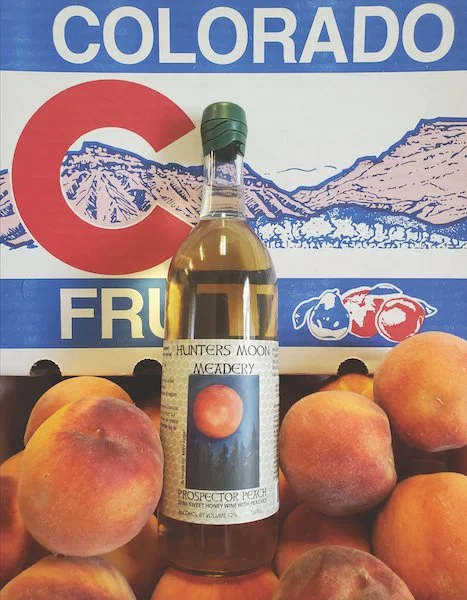
Photo courtesy of Hunters Moon Meadery

“We’re still spending a lot of our time educating people on what mead is,” says Kim Bowdish, who co-owns Hunters Moon Meadery with her husband, Greg, in Severance. 

When it comes to Colorado, beer has certainly dominated the beverage scene. It’s home to over 400 breweries and only about 20 meaderies. Yet, Colorado’s mead industry has been plugging away for decades. And a state full of adventurous beer drinkers might be exactly what it needs in an ever-changing craft beverage landscape. 

THE EARLY YEARS

Not quite 15,000 BC, but in 1995 Meadery of the Rockies in Palisade became the first of its kind to open in the Centennial State. Later bought by Talon Wines, guests can find meads ranging from apricot honey to honey sherĂ©, a fortified dessert mead. They were the only one in the state until David Myers opened Redstone Meadery in Boulder six years later. It was 2001, and the early days of Colorado’s craft beer boom were in full swing. Microbreweries were starting to pop up and homebrewing was all the rage. Like many meadmakers, Myers was first introduced to the beverage via homebrewing. 

 “We knew we were pushing the rock up the hill,” he says when it came to introducing mead to the market. “It was just a matter of keeping at it. We pride ourselves on education and entertainment by putting ourselves out there at wine festivals, beer festivals and in-store tastings.” 

Mead is classified as a wine and it often comes in at about 12–14 percent alcohol-by-volume (ABV). But Myers opted to take a brewer’s approach and created some of the first “sessionable” meads on the market, clocking in at about 8% ABV. He’s now distributing in 30 states. 

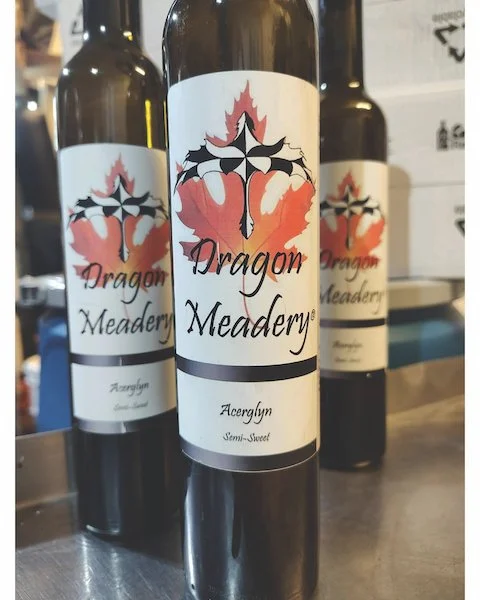
Photo courtesy of Dragon Meadery

But that rock wasn’t quite up the hill when Colorado’s third meadery opened its doors in 2014. 

“Nobody had any idea what mead was,” says Alexandria Fox of Dragon Meadery in Aurora. “There was no ‘Game of Thrones’ and ‘being a Viking’ wasn’t a thing yet. So we spent a significant amount of time teaching people what mead is exactly. And how it can vary so much depending on the honey and what you do with it.”

Like Myers, Fox and husband Shane put a lot of time and effort into educating consumers and figuring out what they liked to drink. 

“We do a full tasting flight of everything we have available, usually 12 meads,” Fox says. “And we have a tri-fold menu with a legend inside explaining the different styles of mead like hydromels, cysers, metheglins and more. We have even spent time educating the government on the different categories of mead.” 

But this seemingly continuous uphill battle can also present craft beverage makers with some unique opportunities. Like when Michael Fagan, managing partner of Honnibrook Craft Meadery in Castle Rock, was on the fence about the direction to go when it came to getting into the craft beverage industry. 

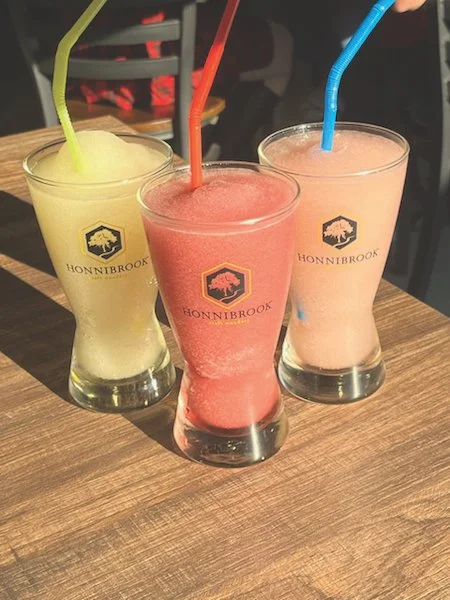
“We had to make a decision,” Fagan says. “Did we want to join the hundreds of breweries or the handful of meaderies? We went the meadery route.” Currently, they have 90 approved recipes that rotate through their 20 taps. Guests can also expect a second taproom opening in Littleton this summer.

Today, Colorado has about 20 registered meaderies. Of course, there are 20 times the amount of breweries throughout the state. But maybe that isn’t necessarily a bad thing. 

“Even though mead is technically a wine, we have always billed ourselves with craft beer,” Myers says. “Craft beer drinkers are adventurous and tend to always be looking for something new to try.” 

Adrian Beebe, founder and meadmaker behind Cloud City Meadery in Leadville, agrees. “People are always looking for something new and there are a lot of passing fads,” she adds. “But I don’t think that’s mead because it can be so many different things and is continuously changing and evolving.”

Photo courtesy of Honnibrook Meadery


IT’S TIME TO GIVE MEAD A SECOND CHANCE 

When someone says they don’t like beer, it’s usually after a lot of trial and error. Or perhaps they will say they like beer but not IPAs or sours. But that’s only after they have given these styles several chances at several different spots. However, when it comes to drinks like cider or mead, people only seem to give it one shot before writing off the respective categories completely. But these meadmakers would like you to reconsider. You might be surprised.  

“Some people think it’s a honey beer,” says Bowdish of Hunters Moon. “Other people think it’s syrupy sweet, which it’s not. We have 24 meads right now that range from very dry to very sweet and everything in the middle.” One of their most popular offerings is the Earl Greg, made with Earl Grey tea and Colorado honey. 

Similarly, Cris Slaymaker, co-owner of Slaymaker Cellars in Idaho Springs, has started to see a shift when it comes to mead 

“This will be our fifth summer having a tasting room,” Slaymaker says. “And throughout the years I hear less and less people asking ‘what is mead.’ People also seem to recognize that there are a range of styles within the category.” 

WHERE IS COLORADO MEAD GOING? 

“The more players in the market can only help the category,” Fagan says. “Because the more people who have the opportunity to try it, the more likely they are to look for it in the future.”

Of course, it’s difficult for craft businesses right now. About 40 Colorado breweries shuttered in 2024. And there is a growing concern about drinking versus overall health amid a recent surgeon general’s warning regarding alcohol and cancer risks. 

“It’s a tough time to be in the beverage industry,” Myers says. “Right now it’s not necessarily how you grow but how you keep from shrinking. But I still think it’s about connecting with the people, getting your story out there, and of course, always making a quality product.”

Kristen Richard is a drink and food freelance writer based in Denver. When she’s not traveling down the rabbit hole of random esoteric booze knowledge, you can usually find her camping, hiking, hanging with her dog, reading or rocking out to metal bands. 

https://www.thirstcolorado.com/source/2025/6/30/colorado-mead

Thursday, 28 July 2022

Mechalore MeadWorks Makes Experimental Meads in Loveland, Colorado

From westword.com

Honey won out over barley for one Colorado brewer. When Adam Thompson started making beer and mead in 2006, mead quickly became his preferred beverage to brew. “I started realizing how wide open mead is, and how nobody has really explored mead as much and tested the potential,” Thompson explains.

Last year, he opened Mechalore MeadWorks in Loveland, where he brews four different kinds of mead every quarter. In his No Where to Hide series, he keeps his recipes traditional but changes the type of honey each time. His Volume One won a bronze medal in the Traditional-Dry category at this year's Mazer Cup, an international mead competition. “It’s a great mead to show how different various types of honey can be,” he notes.

Thompson says he loves to experiment not only with different types of honey, but also with spices and other ingredients. His mojito mead, called Fed Unto the Axioms, blends orange blossom honey, spearmint and lime zest. Tahitian vanilla bean is used in his sweeter creamsicle-style mead.

Mead maker Adam Thompson is all about experimenting when it comes to his Loveland-based mead operation. 
Mechalore Meadworks


“The sweeter ones tend to be more popular even though everyone complains about mead being too sweet,” Thompson laughs. Some of the sweet bestsellers include a French toast mead and an oatmeal-raisin cookie mead.

The brewer embraces sweet meads as well as modern styles. “I’m trying to hit what I think are the different palates out there — the traditional, the spice, the dessert-like, the sweet," he explains.

Regardless of the type of mead or what he pairs it with, he's glad to be making it in Colorado. “I’m happy to be part of this group,” he says of the state’s close-knit group of mead makers.

For those new to mead, Thompson advises that all meaderies are different and encourages people to keep trying and experiment. “There are a lot of good meads in Colorado. If mine doesn’t hit you, try somebody else,” he says.

Thompson plans to open a taproom in a few years, but for now he's still managing a landscaping company full-time as well as two young daughters, his official honey tasters. For now, find the mead in liquor stores in Denver and throughout the Front Range. For more information, visit mechalore.com.

https://www.westword.com/restaurants/lovelands-mechalore-meadworks-explores-traditional-and-experimental-styles-11424314 

Tuesday, 21 December 2021

Colorado USA: Meadery’s tasting room a sweet spot in downtown Idaho Springs

From clearcreekcourant.com

Whether it’s for last-minute holiday gifts, something sweet for Christmas dinner, or something exciting to open for New Year’s, there’s something for everyone at Slaymaker Cellar’s new tasting room on Miner Street.

Co-owners Chris and Kent Slaymaker started making mead, a honey-based wine, in Idaho Springs last year. In July, they and staff members Jenn Pedersen and Jessica Guy opened the tasting room at 1535 Miner St., where they offer samples, bottles of mead, and other honey-based products.

The Slaymakers and Pedersen explained how there is a mead for everyone. There’s a variety of flavours and a spectrum of sweetness. Some can taste more like beers, while others taste more like wine. They even offer sparkling mead.

“Anything we can do with grape wine, we can do with honey wine,” Kent said.

Chris and Kent Slaymaker started making mead in spring 2020 and opened the Slaymaker Cellars tasting room at 1535 Miner St. in July. The tasting room has been a great way to build brand recognition and educate people about mead, a honey-based wine, they said.  
PHOTO BY CORINNE WESTEMAN


Slaymaker Cellars uses Colorado honey in its meads, and different honeys serve as the base for different meads. For instance, wildflower mead comes from wildflower honey, they said.

The business’ flagship meads are orange-blossom, wildflower, and tart cherry, but it also features rotating seasonals and dessert meads.

As for the new tasting room, the Slaymakers and Pedersen said it’s been a great way to educate people about what mead is, build brand awareness, and visit with tourists.

Having the Miner Street Market when the tasting room first opened helped bring in more foot traffic, because most people would never notice the storefront just driving by, they commented.

Along with the tasting room, mead fans should also be on the lookout for Slaymaker products at local restaurants and retailers. 

Overall, Chris and Kent said they want to be good employers who support local producers and serve a great product.

The Slaymaker Cellars tasting room is open 10 a.m.-5 p.m. Thursdays through Mondays. For more information, visit slaymakercellars.com.

https://www.clearcreekcourant.com/stories/meaderys-tasting-room-a-sweet-spot-in-downtown-springs,386445

Sunday, 7 November 2021

It’s Colorado mead, honey!

From thefencepost.com

Premium Colorado honey and unique approach fuels Honnibrook Craft Meadery’s award winning success


Just a couple of home brew enthusiasts since the 1990s, Honnibrook Craft Meadery co-owners Michael Fagan and DJ Kurtz became friends in 2010 and started a business journey together that eventually took the surprising path of opening a craft meadery. That journey has brought growth and awards to their Castle Rock, Colo., based facility, including winning the prestigious “Commercial Wine 2021 Best of Show” trophy at the Colorado State Fair for their Peach Habanero mead.

Officially open for business in February of 2019, how has Honnibrook Craft Meadery managed to stack up the growth and awards? Fagan and Kurtz credit their unique approach to crafting mead along with using premium Colorado honey from Lockhart Honey Farms.

BREWERS APPROACH TO MEAD

Although dedicated home brewers, the duo also enjoyed making the occasional mead. At different locations, they would bring in both drinks, only to observe“ people were drinking the beer, but they were lining up for the mead.”

But it still took more to nudge them into mead making.

“We still wanted to brew beer, because beer was cool,” said Kurtz with a laugh as he and Fagan supervised the machines pumping and mixing a 55-gallon drum of Colorado honey with filtered Castle Rock water. According to the pair, drafting a business plan was the tipping point.

“We looked at (our) business plan and we needed $1.5 to $2 million dollars,” said Kurtz about the costs of a craft brewery requiring outside investment. “We realized we were going to be employees. We were not going to be owners.”

“Do I really want to work the long hours for someone else?” chipped in Fagan. “So then we were like, we are going to do mead, but still keep our beer roots.”

Keeping their beer roots meant approaching mead from a “light and refreshing” beer angle versus the traditional heavier wine style of most 10%-14% alcohol content meads.

“It was probably about two and a half years of experimentation,” said Fagan about dialling in their product while noting Kurtz’ formal training as a culinary chef was vital to the process. “We were trying to get the mouthfeel (and) the taste right,” Fagan continued. “We were taking little torpedo kegs to backyard barbecues, and when people were like, ‘that is pretty good beer,’ we knew we were onto it.”

As a result, Honnibrook’s unique style of mead is a lighter alcohol content with a fine-tuned carbonation level.

“Two and a half years of experimentation tells us 6.2% (alcohol content) is the magic number,” said Fagan. “It is where we want it to be.”

Honnibrook’s growth has caused Fagan and Kurtz to craft a new batch of mead every several weeks, versus starting off in 2019 making batches every several months. On top of finding their magic number of 6.2%, Fagan and Kurtz also credit Colorado’s Lockhart Honey Farms for their mead’s surging popularity.

“It is a super rich, monofloral honey,” said Fagan. “We get a super clean ferment and we get the same product all the time. We need the consistency.”

PREMIUM COLORADO HONEY

“That is the thing we bring to the table with our alfalfa honey is we set our bees next to large alfalfa fields and every year those fields are going to bloom,” said Leo Lockhart about their monofloral honey’s consistency. “When you set your bees up around just wildflowers and those kinds of things, you are getting a different balance of flowers so every year the flavour can be significantly different.”

A second generation beekeeper, Leo takes care of the bees while his wife Laura manages the business side. He estimates they have 1,200-1,300 hives in Colorado, while his entire family keeps about 9,000 hives in the state. While Leo and Laura also have hives in Nebraska and they move hives around the country throughout the year, he believes Colorado honey is the best.

“Colorado honey tastes so much better than anything else in the nation,” said Leo. “I go to national conferences and I always try the other honeys and I have never found another one that I would even put in the same ballpark as Colorado.”

“The area we produce is in the Arkansas River Valley,” Laura said. “It has always been a very high quality product. It seems like it is a rarer find (and) a rare taste. I am just glad it is something that works really well for making mead and that (Honnibrook) has had a lot of success with it.”

“We feel very lucky to have gotten hooked up with them,” added Leo about supplying drums of honey to Honnibrook Craft Meadery. “Their mead is great. I think that is one of the reasons they do so well is their attention to quality and caring about their ingredients so much.”

AWARD WINNING MEAD

That quality and care produced the aforementioned Commercial Wine 2021 Best of Show title at the Colorado State Fair. While Kurtz and Fagan had previously won Best of Show there in the mead category, the overall Best of Show caught them by surprise.

“That is grape wine judges telling us our mead is better than the grape wines they judged,” said Kurtz. “We earned Best of Show against the big guys. It is still hard to comprehend.”

“To win best wine in Colorado, never in our wildest dreams,” said Fagan. “It is just stuff we never expected to happen to us.”

Honnibrook was also recently ranked No. 1 in a list of “The 10 Best Wineries in Colorado” by ChoiceWineries.com. Although awards are gratifying to Fagan and Kurtz, they just love making mead.

“We always talk about (Honnibrook) as our happy place,” said Fagan while Kurtz nodded and smiled. “In our day jobs there is a lot of stress and there are lots of unhappy people. When people come here, everyone is happy. They are excited about it and we get excited about it.”

For Honnibrook Craft Meadery, using premium Colorado honey has led to sweet success.

For more information about the award winning Honnibrook Craft Meadery, as well as Lockhart Honey Farms, you can find them online at https://www.honnibrook.com and https://lockharthoneyfarms.com

https://www.thefencepost.com/news/its-colorado-mead-honey/

Saturday, 21 September 2019

Miracle Stag Meadery Highlights Local Honey in Loveland, Colorado

From westword.com

Arpad LĂ¡szlĂ³ Kovacs combined his desire to make wine with his family’s experience in bee keeping to open Miracle Stag Meadery in Loveland, where he creates a wide variety of meads with Rocky Mountain water and local wildflower honey. “Honey is obviously the most important part of the product,” he explains, so he uses natural and organic ingredients, with no preservatives, whenever available.

One of his most popular small-batch meads, Dragonblood, is inspired by Game of Thrones. “It gets its wonderful red colour from cherries, raspberries, blueberries and blackberries,” Kovacs notes, adding that Dragonblood has a rounded character from oak aging, but the fruitiness still comes through in the finish.

                                                                   Arpad LĂ¡szlĂ³ Kovacs


Honeymoon, which is also oak-aged, is made with raisins and dates. “The oak flavour makes it perfect for making mixed drinks with whiskey or bourbon,” the mead maker points out. “In general, meads tend to have a bit of a sharp, boozy quality initially, which smooths out with oxygenation. It’s something not far from what you’d experience in whiskey or bourbon."

Just in time for fall, Yule Lad is spiced mead similar to apple cider. “It’s the flavours you’d find in an apple pie,” Kovacs says. Saucy Wapiti is his most classic mead style, made with just honey, water and yeast.

“People are realizing it’s another gluten-free option,” Kovacs notes of mead's recent increase in popularity. He adds that he has seen an increased interest from bars that want to offer mead to customers.

Because mead has the potential for aging well, Miracle Stag's bottles are labelled with a "born on" date, and they're also marked dry, semi-sweet or sweet to help you pick the right mead for your palate.

Currently, Miracle Stag Meadery is available by the pour at Brix Brew & Tap in Greeley, Loveland Tap & Tavern, and The Barrel and the Wapiti Colorado Pub, both in Estes Park. You can also buy it by the bottle in liquor stores throughout Northern Colorado, including Argonaut Wine & Liquor in Denver, Boulder Wine & Spirits and Wyatt’s Wet Goods in Longmont. For more information, visit miraclestagmead.com.

https://www.westword.com/restaurants/denver-best-green-chile-11483894