The report includes market size and forecasts across all segments, presenting values in USD. It also delivers key statistics on the current market status of leading players, long with insights into prevailing market trends and emerging opportunities
New York, US — December 4, 2025 — The mead market is on the cusp of a major transformation, driven by a resurgence in consumer interest in craft beverages and the unique qualities that mead offers.
Market Overview
Historically overshadowed by beer, wine, and spirits, mead is experiencing a renaissance as consumers increasingly seek unique and artisanal beverage options. Made from fermented honey, water, and various flavourings, mead appeals to a diverse audience looking for both quality and authenticity in their drinking experiences. The growing popularity of mead is attributed to several factors, including the craft beverage movement, health-conscious consumer trends, and innovative flavour profiles.
Craft Beverage Movement: The rise of the craft beverage movement has revitalized interest in mead. Consumers are shifting away from mass-produced beverages and seeking out artisanal products with unique flavours. Mead fits perfectly into this trend, offering a wide range of styles and flavour combinations that cater to adventurous palates.
Health Consciousness: Mead is often perceived as a healthier alternative to traditional alcoholic beverages. Made primarily from honey, it can be lower in calories and gluten-free, appealing to health-conscious consumers. Additionally, many meads are produced with natural ingredients, aligning with the clean eating movement.
Diverse Flavour Profiles: Mead producers are experimenting with various flavour combinations, from traditional meads to innovative blends with fruits, spices, and even hops. This experimentation is attracting a broader audience, including those who may not have previously considered mead as an option.
Increased Accessibility: The expansion of meaderies and the growing number of craft producers have made mead more accessible to consumers. Online sales channels and distribution through local retailers are allowing consumers to explore different brands and styles, further driving demand.
North America is currently the largest market for mead, driven by a growing number of craft meaderies and increasing consumer awareness. The United States, in particular, has seen a surge in mead production, with many states embracing the craft beverage movement. Europe, with its historical connection to mead, remains a significant market, particularly in countries like the UK and Germany, where traditional mead styles are being revived.
Challenges Facing the Mead Market
Despite the positive outlook, the mead market faces challenges such as competition from established alcoholic beverages, regulatory hurdles, and the need for consumer education. Many consumers are still unfamiliar with mead, which can hinder market penetration. Additionally, the craft beverage industry is becoming increasingly competitive, requiring producers to differentiate themselves through quality and innovation.
Future Outlook
The future of the mead market looks promising as consumer preferences continue to shift towards unique and artisanal beverages. Innovations in flavour, packaging, and marketing strategies will play a crucial role in attracting new customers and retaining existing ones. As the market matures, collaboration among meaderies and partnerships with restaurants and retailers can further enhance visibility and accessibility.
Conclusion
The mead market is poised for remarkable growth, fuelled by the craft beverage movement, health-conscious trends, and an increasing appreciation for unique flavours. As producers continue to innovate and educate consumers about this ancient beverage, mead is set to carve out a significant niche in the global beverage landscape. Whether enjoyed at home or in social settings, mead is becoming a staple for those seeking something different in their drinking experience.
In a German city of beer, Valkyrie’s Kiss is the first meadery.
Mead is an alcoholic beverage that, while having a similar production process as wine, is actually a drink in its own category separate from beer and wine. Instead of grapes, honey is used in addition to water and yeast to create mead. The drink is the oldest recorded alcoholic beverage in human history, predating wine by at least 3,000 years.
When Comal County native Isaac Pruna finished serving in the Army, his plan was to open a brewery and wedding venue. Soon, he realized that the beer and wine market was starting to fall, and when researching wedding venues, he learned that the term “honeymoon” came from mead.
Then, Pruna started to get more interested in the drink.
“Some of my buddies, too, were making [mead] at their house, and I was like, ‘What is this?’” Pruna said. “Then I went to a couple of Renaissance festivals, and I started drinking a lot more of it … and I wondered if I could make something out of it.”
Pruna started digging deeper into the world of mead and found a mentor: Micah Erwin of Elgin Meadery. Pruna and his team learned more about making mead and purchased some of the recipes from Erwin before he retired.
“My brewers and I, we had never done commercial mead making, so [Erwin] definitely helped,” Pruna said.
In Norse mythology, valkyries are female figures who guide souls of fallen warriors to Valhalla, Odin’s majestic hall, similar to heaven in Christianity. The meadery’s name is inspired by this tale and Pruna’s military background.
“I had a bunch of other names and I narrowed it down to this partly because of my brothers in arms,” Pruna said. “I served 10 years in the Army and I lost some buddies, so it was just kind of an homage to them, hoping that they were able to get kissed by the valkyrie and get to go to where it is that they wanted to go, whether it be heaven or Valhalla.”
Valkyrie’s Kiss offers several varieties of mead, including a traditional dry, cherry, lemon, a sweet traditional and other seasonal and premium flavours. Some of the flavouring ingredients, specifically elderberry and hibiscus, are purchased from the New Braunfels Farmers Market. The rest of the fruits needed for flavouring are purchased elsewhere but are still fresh, and Pruna says he is looking for local farmers that can supply the quantity needed for production.
The mead is bottled and corked by hand after being fermented and aged in-house. All of the honey used comes either from Youngblood Honey in Pearsall or Holdman Honey in Seguin. Each batch of mead requires four 55-gallon barrels of honey.
The mead is available for purchase at the New Braunfels and Boerne farmers markets as well as the farmers market at The Pearl in San Antonio — or customers can make reservations to come to the meadery and do tastings on Fridays and Sundays. Charcuterie boards arranged by Otto’s Cheese Shop are also available at tastings.
Several local restaurants and bars carry Valkyrie’s Kiss, including Moonshine & Ale and Loki’s Axe Haus, as well as a few places in Austin and Houston. If none of these options are available, Pruna says customers can also contact him to arrange local pickup.
Valkyrie’s Kiss is located at 6500 State Highway 46 West in New Braunfels. The phone number is 830-481-2101, and they can be found online atvalkyrieskissmead.com.
Thor: “Oh! Yes, indeed! My father’s hall is full of mead!”
Mead
Thor’s reaction gives you an indication of how the Germanic peoples (those we consider the German, Norse, and Anglo-Saxon) thought of mead, it’s even a bit of an understatement. Mead was the drink of the gods, of which the people happily shared with them, and would drink whole vats of while devouring roast oxen.
As far back as the 400s, after the Romans left Britain and the Anglo-Saxons took over, they made use of the many wild bees found on the island. In fact, pre-Roman Celtic Britons referred to their island home not only as the White Island, but the Isle of Honey. Even into the Norman Conquest, honey was nearly the only sweetener available and the lower classes of society’s only sweetener even into the 1600s. In Anglo-Saxon times, honey was also used to create mead. No matter what tavern you stopped in, town or village, they were almost assured to have mead on hand. Mead was used at royal banquets and by the monks. Extant writings even give the amount Aethelwold, Bishop of Winchester, allowed his monks at dinner: a sextarium, which is several pints. Not too shabby for a dinner!
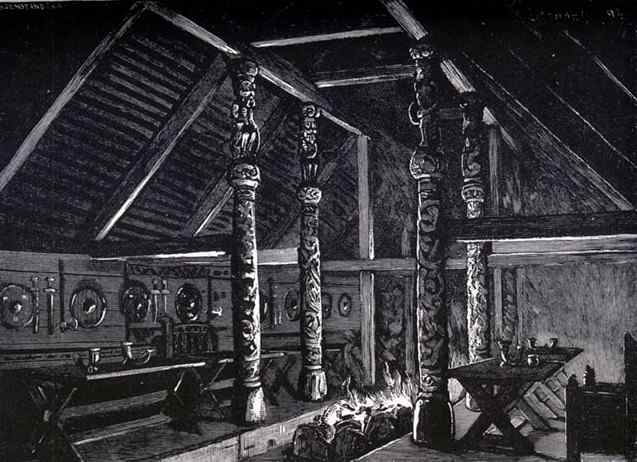
Interior of Anglo-Saxon mead hall. Iowa State
There were three kinds of liquor made from honey by the Anglo-Saxons. Mead proper, the most common and drunk by the common people, was made by steeping the crushed refuse of combs after as much honey as could be was extracted. Morat was the honey and water mead with the addition of mulberry juice. The third was pigment, which was honey and water with spices added, and which we now call metheglin, and which was used by the top rung of society, being served at the royal table. If you’d like to try to make an authentic Anglo-Saxon mead, you can find directions here.
Much later, Sir Kenelm Digby (1603-1665) described mead as the Liquor of Life, although this was shortly before mead lost its pre-eminence. It was not without a fight, though, as in 1726, Dr. Joseph Warder stated that the meads of England were in no ways inferior to the wines of France or Spain. The Tudor Dynasty, though, with their insistence upon foreign wines, truly doomed the honey drink, even if the last of them enjoyed mead. Germany had a similar issue with a drop in mead production, due to the Reformation and the Thirty Years War (giving a time frame of the 1500s into the 1600s), which saw a drop of thirteen mead houses to only one.
Having thus been common and starting to fall out of repute as wine from the south started making its way into the country, it was still common in country houses up through the late 17th century, and was especially used for wedding feasts. There were exceptions, with Lancashire having a famous braggot into the late 1800s, with some towns having a “Braggot Sunday” celebration during Lent. Another exception is that beekeepers and some country women kept the practice of brewing mead going into modern times, with the caveat that the best mead was aged in wood. As well as the making of mead, these apiarists also kept the knowledge of the curative properties of honey in the collective wisdom, with it being used as a remedy for obesity, constipation, depression, indigestion, and irritability, and the bees, with their stings, were also used for arthritis and as an antiseptic. An ointment made of honey and turpentine was also used for bruises and sprains.
Queen Elizabeth herself had her own mead recipe, which has come down to us through the writings of her beekeeper Charles Butler. It is an easy recipe to find online, and is an interesting looking methaglin. It contains spices that should be easy to find, such as thyme, bay leaves, and rosemary, but then also includes a rarity of these days, sweet briar. It should also, like many meads, be left for six months or more before drinking, unless you don’t mind it being rougher than it need be.
Queen Bee as Queen Elizabeth (Kat Dreibelbis) Etsy shop
The Germans drank their mead out of silver tipped bull horns, something which Julius Caesar himself remarked upon. Obviously this was such an important aspect of their culture, that a thousand years later King Harold of Norway had such drinking vessels, adorned with gold and silver. A couple hundred years before in Anglo-Saxon England, King Witlaf of Mercia was another mead drinker who used decorated bovine horns. An ancient runic calendar from Scandinavia shows these horns being used as a symbol for Yule.
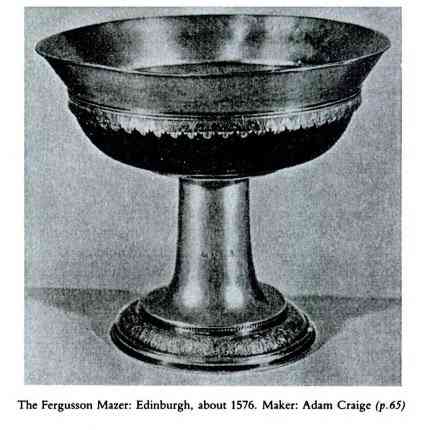
Eventually these horns went out of fashion and ornate silver cups and wooden bowls started being used in their place. These bowls were called mazers, from a Middle English word for maple, which was the favoured word to use when making the wooden version. Mazers came in many forms, including the mether cup, which was used solely for mead, unlike the mazer which was also sometimes used for wine or ale.
Mead crept into all aspects of the culture. The English word honeymoon is derived from the ancient European practice of giving a newly married couple enough mead to last a month, or moon’s cycle, as honey and mead were thought to enhance fertility.
In more linguistics of England, the word braggot, which is a Welsh word that did indicate beer possibly with honey, and now is a mead with beer grains, is instead said to have evolved from the Norse god Bragga. Obviously, linguistics shows us that it is of Welsh origin, but it is greatly fascinating to see what other origins are given to words over time, regardless of historical accuracy.
In further linguistics (isn’t this fun?), the English word supper comes from the Anglo-Saxon supan, meaning “to drink,” as opposed to dinner, which is from dynan for “to feed,” giving every indication that our later evening meal should definitely consist of some ale, mead, or wine. In fact, evening comes from aefen, which is “drinking time.” Another term still in rural use is skep, for a bee home, coming from skeppa for “basket.”
In literature, the Wassail bowl is mentioned in Shakespeare’s Midsummer Night’s Dream, in the line “sometimes lurk I in a gossip’s bowl.” It is explicitly given in his Hamlet, with the actual word wassail being used. Chaucer shows the sweetness in Miller’s Tale with “her mouth was sweet as braggot or metheglin.”
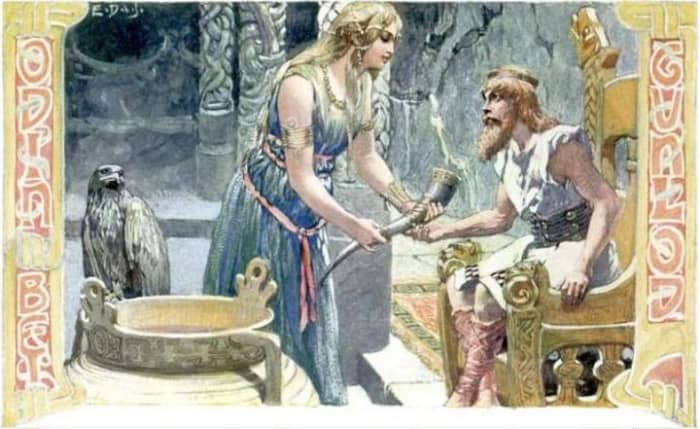
Perhaps the most well-known tale of mead is that of Odin’s mead of poetry. A tale too long for here, and told superbly by others (although perhaps I shall give it my own spin soon, as I did with the spooky tale of Nera, it is nonetheless more than a simple worth of mentioning. Odin’s mead is the Mead of Inspiration. Without it, we would have no poetry. Poets of yore were called “bearers of the mead of Odin,” because of this influence. Such an influence does have its negative side, though, with bad poetry being the cause of drinking Odin’s mead created urine. The famed American writer Walt Whitman even insisted that poets speak not just with intellect, but with intellect inebriated by nectar.
Odin is offered the Mead of Poetry by Gunnlod. Public Domain
Honey
And where would we be without the magical pot of bee spit that gives us mead, honey! Although not as deep in lore as the Celts, there is still evidence of a great love of the bee and honey.
In Germany, if you find a swarm of bees on a branch, if you use this branch to lead cattle to market, they will fetch a higher than usual price. A bee alighting on someone’s hand signifies money and alighting on the head signifies life success.
Even after the Christianization of the northern countries, The Finns thought the sky was God’s storehouse, where was kept the heavenly honey that healed all wounds.
The great Anglo-Saxon king, and nearly the first of England, Alfred required all bee keepers announce swarms by the ringing of bells, so that they would be followed and captured. At the same time, the Catholic Church required wax candles, and so bees were a necessity for religious life.
Wassailing
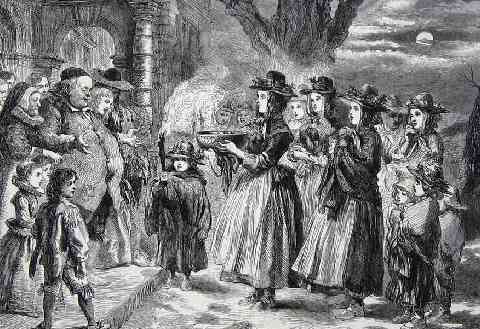
Another aspect of mead was its use in social situations, where in it was drank while boasts were made and pacts were sealed. A part of this is the toast, an honouring with drink, which was a very significant part of feasts for both the Norse and the Anglo-Saxons. From the Anglo-Saxon saga Beowulf, we learn of the appropriate salutations for drinking with mead. These are “wacht heil,” meaning “be whole,” when giving the mead and “drinc heil,” meaning “drink, hail!” The first is the only typically still used and has become our now beloved “wassail!”
Wassailing Public Domain
Wassailing eventually became the act of drinking to the health of trees, more than likely a nod to pagan times and giving honour to nature. Revellers would walk around the tree and wassailed it three times with:
Here’s to thee, old apple-tree
Whence thou may’st bud, and may’st blow!
And whence thou may’st bear apples enow!
Hats full! Caps full!
Bushel – bushel – sacks full!
And my pockets full too! Huzza!
And so as we finish this article, I say unto you, the reader, “wassail!” I toast and honour you, and may we meet under the long roof of Valhalla where we shall drink from the rivers of mead and dine from never ending roasted boar.
NOTE: You may notice some of the words are spelled differently throughout. These are not errors, but rather I have used all of the different spellings that occur in my research reading. Such wonderful fun!
BERLIN, Md. – Opening up a business can be a scary venture, especially during a global pandemic… but a man named Brett Hines is determined to make a difference with his new establishment called The Buzz Meadery.
Mead, also known as honey wine, is the oldest existing form of alcohol.
Hines said, “Beer is made with grain, wine is made with grapes, mead is made with honey… and that’s the way I like to think about it.”
Not only is mead a historic and delicious drink, it’s also environmentally friendly.
Hines said, “I really like making mead because I’m able to actually source the supply chain, the entire supply chain myself from our local community.”
Hines works with local farmers and a local apiary to brew up the beverage, helping both the honeybee population and the local agriculture industry to thrive.
“Through keeping our supply chain local, not only do we support local farmers, we empower our community by keeping more dollars in our communities, but we also reduce our carbon footprint,” Hines said.
Hines also sells his mead in reusable bottles, which people can bring back to get a discount off their next order.
“Then we’re not having to buy new you know bottles or cans all the time,” Hines explained.
So not only is Brett producing delicious mead, he’s also brewing up conversations about environmentalism in Berlin.
Hines said, “Everybody can relax around a glass of mead, and that’s how I felt the most approachable way was to have this conversation was through that.”
So whether he’s crafting the perfect drink for his customers, inspiring others to pursue their goals, or pouring out his feelings about environmentalism, you can always find Hines creating a buzz about mead in his community.
Hines works closely with his wife to make this all possible. She is also into environmentalism.
If you’re interested in buying a bottle from Brett and his wife, you can find them at the Ocean Pines Farmers Market on Saturday, and at the Berlin Farmers Market on Sunday.
You can also find them at their taphouse located at 9040 Worcester Highway, Unit D in Berlin. Their taphouse is open Thursday through Sunday 1 p.m. through 6 p.m.
You can find The Buzz Meadery on Facebook by clicking here.