Showing posts with label health. Show all posts

Thursday, 18 May 2023

A Taste of Ancient Times: How Honey Mead Has Captivated Palates for Centuries

From scoop.co.nz

Anyone who has ever seen a fantasy movie or played a medieval-themed game would know the significance of mead. Mead is the oldest alcoholic beverage known to man, predating both wine and beer by thousands of years. Mead history, in fact, is largely included in most academic research done on human history. The process of creating both wine and beer necessarily involves growing the crops used for it and the use of vessels such as barrels or pottery for storage and fermentation of these beverages. Mead is believed to have already been around even before planting crops and creating ceramic pottery was known.

Perhaps an even more interesting fact about honey mead is that it is fast becoming a preferred beverage by many home brewers today, as the ingredients are fairly simple and safe, and it is believed to be far safer to consume than most other alcoholic beverages. The popularity of honey mead today is such that there is an actual demand for it in the market, with many searching for sellers and even manufacturers online.

A Sweet and Intoxicating History

The exact historical date of the discovery of mead is practically impossible to trace, let alone trying to figure out who first made it. The primary ingredient of mead is honey made by honey-producing insects, which has a peculiar property of becoming naturally fermented. It is therefore quite easy to imagine some nameless person in history stumbling over an intoxicatingly fragrant sticky substance that brought about a better mood once imbibed.

There is archaeological evidence suggesting that mead was already present in northern China as early as 7000 BCE , although the earliest surviving written record of honey mead is mentioned in the Rigveda, an ancient collection of Vedic Sanskrit hymns. The sublime taste and eventual inebriation that followed often led people to associate mead with divine origins, which is why alcoholic beverages are also largely seen in many religious rituals.

Considering that mead is known to have at least 8% to 20% alcohol by volume (ABV), it is quite easy to get inebriated with this beverage. Add to that the fact that it is not bitter or sour in flavour compared to most other alcoholic beverages, mead is historically known to have been consumed in large quantities wherever it could be found.

Does Mead have any Health Benefits?

There are many who claim that despite the detrimental side effects of alcohol overconsumption, there are benefits to be had from the practice of drinking moderately. This claim may be more applicable to mead than to other alcoholic beverages due to the fact that the base components are nothing more than water and honey that went through fermentation. It is not uncommon for others to add other components to it, adding to the flavour and even to the strength of the alcoholic content, but the base ingredients will always remain the same.

As such, the benefits of mead come mostly from the fact that it has a good amount of honey, one of the most popular superfoods known today. The known benefits of honey include:

Anti-inflammatory Properties

Although earlier cultures might not have known the concept of inflammation, honey was used in many early medicinal applications. Honey has been proven to have anti-inflammatory properties, and this fact was discovered early on when honey was used in the treatment of surface wounds. It not only brought down swelling and helped stem bleeding, but it also prevented any further infection of open wounds. This property did not diminish even when honey was consumed or mixed in with other components. A spoonful of honey is still the best home remedy known for a sore throat, which is a symptom of throat inflammation.

Upper Respiratory Tract Infection Treatment

One of the ironies of honey is that it comes from pollen-producing plants. Pollen is one of the most virulent allergens known to man, with severe pulmonary reactions coming from just a brief exposure to it. Honey, on the other hand, has been used since early times in treating breathing problems, particularly issues associated with upper respiratory infections. This is why honey is also known to stop violent coughing fits and even treat congestion brought on by colds. This is also why many throat-clearing lozenges have honey as an active ingredient, as it is known to provide almost immediate relief from most pulmonary and respiratory issues.

Helps Manage Gastrointestinal Issues

There are pathogens that cause prolonged suffering from stomach issues like gastritis, duodenitis and gastric ulcers. These issues are made particularly difficult to manage because they also interfere with proper digestion, which is why oral medications take far longer to take effect. Honey is easily absorbed by the stomach, and because of the viscous nature of honey, it could also line the insides of the stomach to trap and clear the pathogens that make stomach issues linger. Incidentally, honey has also been used throughout history to treat indigestion and even issues associated with bowel movement.

Where Could I Get Honey Mead?

With the burgeoning trend on superfoods and healthy alternatives, most people are trying to find where to buy honey mead online, although the more important concern here than where is the assurance that what is being bought is authentic honey mead and not some other alcoholic beverage being passed off as the legitimate thing.

There are legitimate sellers of honey mead to be found both online and in traditional shops, although a good amount of people also prefer to make their own, since the ingredients are quite simple and easy to acquire. In buying honey mead, an important consideration is to check the purity, quantity, and type of honey used in the product. It is always best to select and procure honey mead that is made with wildflower or natural honey and in a mixed percentage that is at least 51%, or a diluted honey to water ratio of 1:0.5.

https://www.scoop.co.nz/stories/BU2305/S00288/a-taste-of-ancient-times-how-honey-mead-has-captivated-palates-for-centuries.htm 

Tuesday, 28 March 2023

5 Interesting Facts About Mead You May Not Be Aware Of

From scoopearth.com 

For centuries, mead has been a popular honey-based alcoholic beverage many cultures worldwide enjoy. It’s quite fascinating when you start to peel back the layers of mead and discover its rich history and all the surprising facts about it. From its medicinal benefits to methods for fermentation—there’s so much more to learn! In this blog post, we’ll explore five interesting facts about mead that may surprise even those who consider themselves experts on this sweet type of wine. So grab your mug (or goblet!), settle in, and let’s get started!

What is Mead, and how is it made?

Mead is an alcoholic drink made from fermented honey and water. Depending on the recipe, small amounts of spices, herbs, or fruits may be added for flavour. To make mead, the honey is first diluted with warm water before yeast is added to start the fermentation process. The fermentation can take a few weeks to months, depending on the type of mead being made. Different variations of mead include melomels flavoured with fruit, cysers using apple juice or cider, and payment using grapes. Once the fermentation has ended and all sugars have been converted into alcohol, the liquid is usually clarified using products like pectic enzymes or fining agents like bentonite clay. After all these steps, the mead can either be left sweet or undergo secondary fermentation to turn it into a dryer version. Regardless of sweetness level or whether it has gone through secondary fermentation or not, brewing your own mead at home can provide you with a unique experience that keeps you coming back for more!

The history of mead and its connection to ancient civilizations

Mead, an alcoholic beverage made from fermented honey and water, has existed for thousands of years. It was enjoyed by ancient Greeks and Romans, who appreciated its delicate sweet taste and its range of subtle flavours depending on the type of honey used. Some say it was even a favourite of King Midas himself. Hieroglyphs in ancient Egyptian tombs tell us that mead was a sign of greatness, wealth, and power that began to spread across many civilizations from Mesopotamia to Scandinavia, with Nordic gods reportedly giving mead to their kings upon coronation. Even today, mead remains popularly consumed worldwide, highlighting its integral connection between past and present cultures.

Different types of mead available today

Mead is an alcoholic drink that has been around for centuries. It’s a beverage derived from fermented honey, water, and yeast, with possible additives like spices, fruits, or hops. Although it can be made in various styles and flavours, all mead falls into one of three main categories: melomel, metheglin, or traditional. Melomel mead is made with the addition of fruit juice or fruit purees. Metheglin blends honey with herbs and spices for an interesting flavour twist on the traditional mead. Lastly, traditional mead is made solely from honey, water, and yeast – the original recipe that has inspired all other varieties of mead we see today! With so many unique types to try, there’s sure to be one that fits perfectly for anyone’s palate.


Reasons why mead has become popular in recent years

In recent years, mead has become a unique alternative to beers, wines, and spirits. Mead is an ancient alcoholic beverage with roots in the Middle Ages, where it was made from fermenting honey and water. Its ability to adapt to modern flavours has seen its resurgence with those seeking something different from their regular alcohol consumption. Nowadays, hundreds of variations range from sweet and fruity to dry and savoury and even carbonated varieties. With this array of choices ever-growing, it’s easy to understand why so many are turning to mead for their next libation experience. There are many great sources available to buy mead online.

Health benefits associated with drinking mead

Mead can have a variety of health benefits. It is a natural drink produced by fermenting honey with water and various fruits or herbs to create a sweet alcoholic beverage. Many consume mead for its antioxidant properties that help flush free radicals from the body, preventing cellular damage and reducing inflammation. Mead also has immunomodulatory effects, which may improve your immune system’s function, helping protect your body against infection and disease. Its potent microbial effects make it beneficial in treating skin infections and minor wounds while aiding digestion with improved stomach acid production. With abundant essential minerals, vitamins, proteins, and fatty acids found naturally in honey, drinking mead offers various health benefits when enjoyed responsibly.

Concluding Thoughts

To conclude, mead is an alcoholic beverage enjoyed for centuries, from ancient civilizations to modern drinking connoisseurs. It has a fascinating history, and it can be found in many different forms today. There are several reasons why mead has become more prevalent in recent years, including its economic production costs and the various health benefits of drinking it. Whatever your opinion on mead may be, it certainly cannot be denied that it is a unique and flavourful drink that can bring joy and pleasure to anybody who drinks it!

https://www.scoopearth.com/5-interesting-facts-about-mead-you-may-not-be-aware-of/

Friday, 17 March 2023

What you should know about mead, the world’s oldest alcoholic beverage

From simplemost.com

This fermented drink is making a comeback

Hear the word “mead” and you probably think of the medieval and Renaissance eras, or Mount Olympus, or Vikings toasting large metal tankards of the alcoholic beverage.

But mead predates even those intrepid Norsemen and early Greeks — making it the world’s oldest alcoholic beverage! And like craft beer in the last few decades, mead has seen a resurgence in popularity, both for those who make it and those who drink it.

If you’re curious about mead and why it’s so appealing to some, here’s what you need to know.

Adobe

What Is Mead?

So what exactly is mead? And why do people like it?

While it is sometimes labelled as “honey wine,” mead isn’t really a wine or a beer. The simplest form of mead is made from honey and water that’s been fermented with yeast. The key distinction that gives mead its identity is honey.

Millennials and their pursuit of new tastes and flavours are behind the rise in mead’s popularity, according to Fortune Business Insights. The company projects that global mead profits will rise from $487.9 million in 2021 to $1.62 million in 2028.

On top of that, commercial meaderies have grown in the U.S. from about 60 in 2003 to 450 in 2020, the American Mead Makers Association notes. That number doesn’t include wineries and breweries that also make at least one type of mead.

Adobe

The History Of Mead

Mead may not yet be as popular as wine or beer, but it’s probably older than both. Traces of an alcoholic beverage made from wild grapes, honey and rice were found in 9,000-year-old pottery jars in the Henan province of China, and archaeologists have found proof of mead production dating to 7,000 B.C., according to research.

WineCountry reports that more recent research indicates mead may have originated in Africa 20,000-40,000 years ago, when tribes would drink the liquid created by honeybees in hollowed-out tree trunks. Rainwater may have flooded beehives, causing early foragers to drink contents that had naturally fermented with help from airborne yeast.

Mead was called the “nectar of the Gods” in ancient Greece and given to warriors after battle. However, the health benefits of mead due to the antioxidant and antimicrobial elements of honey or the probiotic aspect of mead itself have not been proven.

Mead is prominently featured in the ancient texts “Beowulf” and the “The Canterbury Tales.” Supposedly the term “honeymoon” comes from the practice of a couple drinking mead for a “moon,” or a month, after getting married in hopes that it would help them conceive.

But mead became less popular as wine, beer and spirits rose in popularity while sugar from the West Indies became more available than honey.

“Mead seems to fall when spirits became more widely available, so we’re looking at a time between the 1700s and 1800s,” Fred Minnick, author of “Mead: The Libations, Legends, and Lore of History’s Oldest Drink,” told Vogue about the era when mead-making started to drop off. “Mead is hard to make, especially in the 1700s when you lacked the equipment to obtain honey.”

A modern U.S. resurgence in mead started in the 1960s, although it was initially hampered by interstate commerce laws and other issues.

Adobe

What Kinds Of Mead Are There?

Alcoholic beverages are classified by the type of sugar that’s eaten up by yeast in their creation. Mead has honey. Wine has grapes (or other fruits). Cider has apples. Sake uses rice and beer incorporates cereal grains.

Mead can be dry, semi-sweet or sweet, as well as still, “petillant” (lightly carbonated), or carbonated.

Mead typically contains 8%-20% alcohol by volume (ABV), though “session”-style meads are growing in popularity and have ABV numbers closer to 3%-7%. These hydromel meads have higher water and lower alcohol content. Meanwhile, higher alcohol meads tend to be thick and sweet, almost like syrup.

There are several substyles of mead. These include the following:

  • Melomel is mead with fruit added. Two common melomel types are cyser, mead with apples, and pyment, mead made with grapes.
  • Metheglin has spices like nutmeg or vanilla.
  • Braggot is a fusion between mead and beer because it has malted grains.
  • Acerglyn uses maple syrup.
  • Bochet uses caramelized honey.

A huge range of flavors can be incorporated into mead as long as honey is at the forefront.

How To Serve And Enjoy Mead

Mead can be served hot or cold. That’ll vary according to your taste preference, but going roughly by wine standards gives you a general idea. Lighter or more fermented meads tend to be served cold but not so cold that you can’t taste the different flavours. Heavier styles of mead can be served warm. Mead should be stored at around 70 degrees Fahrenheit in a dark area.

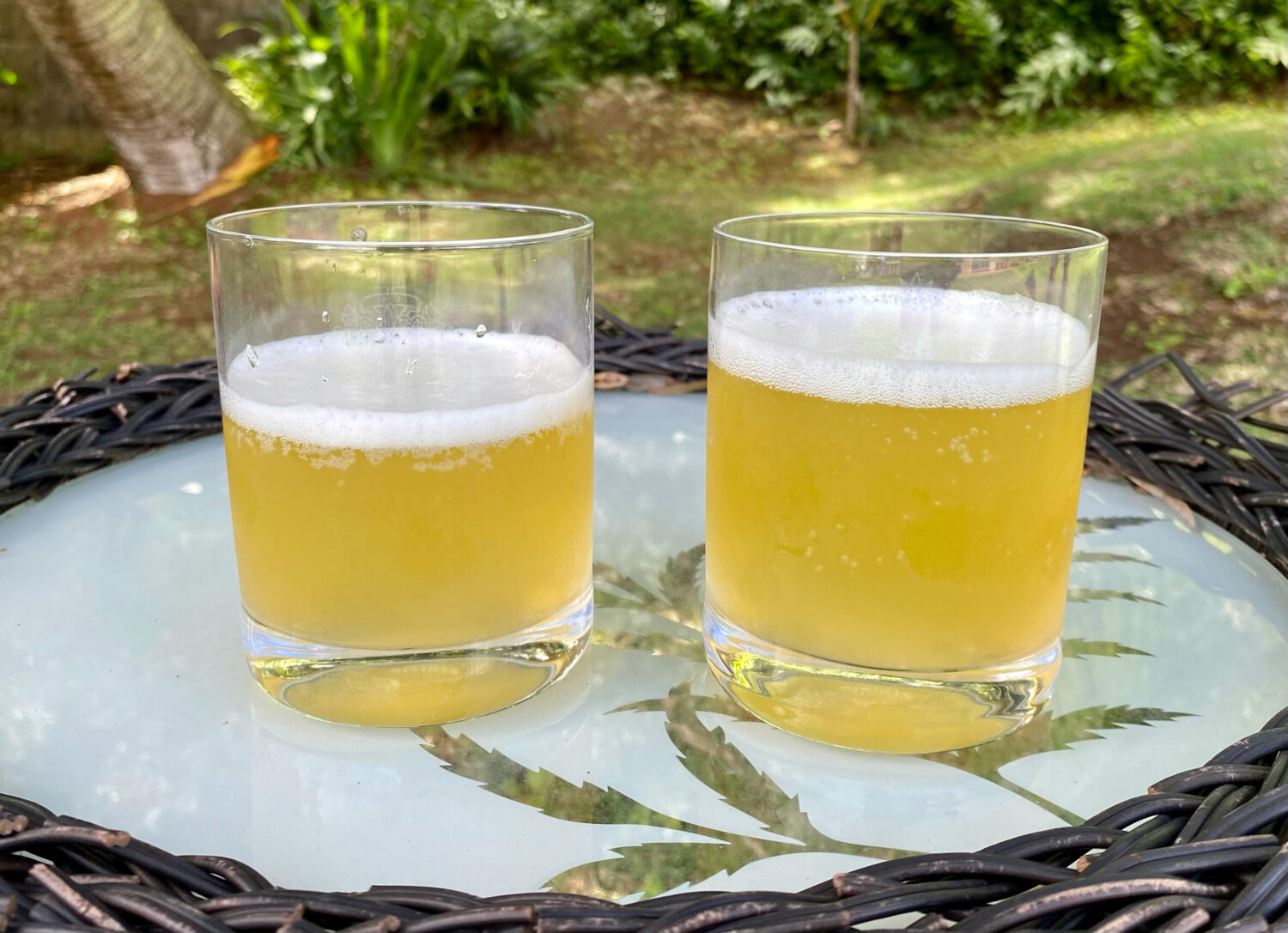
The local lilikoi (passion fruit) and pineapple mead I tried recently, which is pictured below, was served cold and tasted like a cider because of the fruit and carbonation in this variety. But it wasn’t as sweet as cider and you could definitely taste the honey.

Anna Weaver/Simplemost

How To Make Mead

First off, if you make mead, you’re not a brewer or a vintner, you’re a “mead maker.” Most mead makers do use yeast that comes from the wine industry and is designed to withstand alcohol between 14%-18%. Mead can also be aged or oaked like some types of wine.

The type of honey you use changes your resulting mead. And honey is also why mead tends to cost more than beer or cider. You need a lot of honey to make mead and it’s a costlier ingredient than what goes into beer.

A clean and low-mineral water source is important as well. Because honey does not have a lot of nutrients for fermentation, mead makers often put additives in their mead to help the fermentation and create a complexity of flavours.

If you’re interested in trying your hand at making mead at home, there are now many resources and supplies available online, including Got Mead?, the Mead Forum at Homebrew Talk and Meadist.

https://www.simplemost.com/what-you-should-know-about-mead-the-worlds-oldest-alcoholic-beverage/ 

Thursday, 22 December 2022

What Is Mead, and Is It Good for You?

From healthline.com

Mead is a fermented beverage traditionally made from honey, water and a yeast or bacterial culture.

Sometimes called “the drink of the gods,” mead has been cultivated and consumed across the world for thousands of years.

This article explores mead and its possible benefits and pitfalls.

Mead, or “honey wine,” is an alcoholic beverage made by fermenting honey.

It’s one of the oldest alcoholic beverages ever made, as it was consumed as far back as 4,000 years. Interestingly, mead was common across ancient cultures around the world including those in Asia, Europe and Africa.

Though similar to beer, wine or cider, mead occupies a beverage category on its own since its primary fermentable sugar is honey. 

All you need to make basic mead is honey, water and a yeast or bacterial culture. However, ingredients such as fruits, herbs, spices, grains, roots and flowers are often included as well.

Mead’s alcohol content varies but is typically around 5–20%. Its flavour profile ranges from very sweet to very dry, and it’s available in both sparkling and still versions.

SUMMARY

Mead is an alcoholic beverage made by fermenting honey. Its historical significance dates back thousands of years, and it’s available in many styles.

In ancient cultures, mead was associated with good health and vitality. In Greek mythology, it was often referred to as “the drink of the gods” and allegedly given to warriors after a fight to enhance healing of their battle injuries.

Today, many still believe that drinking mead benefits your health and that the drink has healing properties. However, there is limited evidence supporting these claims.

Most modern health claims related to drinking mead are centred around the honey from which the drink is made and the probiotic content it’s presumed to have as a result of the fermentation process.

Therapeutic Benefits of Honey

Honey has been used for its culinary and therapeutic applications for centuries.

Research indicates that honey has strong antioxidant and antimicrobial properties, both of which have driven its use in ancient and modern medicine to treat a variety of physical ailmentsTrusted Source.

Today it’s frequently used as a topical treatment for skin wounds and infections, or consumed orally to soothe a cough or sore throat.

Some claim that because mead is made from honey, it possesses the same medicinal properties. Yet, there is no significant evidence to support this notion.

As of now, it remains unclear if fermented honey has the same therapeutic properties as unfermented honey.

Probiotics and Gut Health

Mead is often heeded as a health-tonic due to its potential probiotic content.

Probiotics are living microorganisms that, when consumed in adequate quantities, can have a positive impact on your immunity and gut health.

Although the understanding of how probiotics support human health is still at an early stage, some research indicates they could help prevent and treat chronic diseases including heart disease, cancer, allergies and gastrointestinal (GI) disorders.

Unfortunately, there is no research specifically evaluating mead as a source of probiotics or how the drink may affect your health.

Additionally, the probiotic content of different types of mead could vary significantly. The fermentation process plus the other ingredients included in the beverage could affect the concentration of beneficial bacteria in the final drink.

What’s more, the alcohol content of mead may counteract any possible benefits, as excessive alcohol consumption is associated with negative changes in your gut bacteria.

Until more research is available, it cannot be confirmed that drinking mead offers any health benefits by way of its probiotic content.

SUMMARY

Mead is often touted for promoting health because of the honey it’s made from and its potential probiotic content. Currently, no research supports these notions.

Though frequently praised for its health benefits, drinking mead could have negative health consequences that may be worth considering before you start filling your glass.

Alcohol Content

The alcohol content of mead ranges from about 5% to 20%. For comparison, regular grape wine has a typical alcohol content of about 12–14%.

Excessive alcohol consumption can lead to serious health risks including liver disease, systemic inflammation and impaired digestive and immune system function.

The American Dietary Guidelines recommend limiting your alcohol intake to one serving per day for women and two for men. One serving equals about five fluid ounces (148 ml) of mead with 12% alcohol by volume (ABV).

Given the relatively high alcohol content of mead, it could be easy to go overboard, especially if you’re drinking it under the assumption that it’s good for your health.

Mead should be treated like any other alcoholic beverage. It’s good to exercise moderation and limit your intake if you plan to drink it.

Allergic Reactions

For most people, mead is generally well tolerated in moderation.

Mead is typically gluten-free, depending on what is added during the fermentation process. Thus, if you have a gluten allergy, double check the mead you plan to drink to ensure no gluten-containing ingredients were included in the brew.

Mead may potentially cause serious allergic reactions in some people, especially those with honey and alcohol allergies or intolerances.

Though rare, there have been reports of honey leading to anaphylactic reactions. If you’ve ever had a serious allergic reaction to honey or bee pollen, it may be a good idea to avoid drinking mead.

Additionally, if you’ve ever been diagnosed with an alcohol intolerance or allergy, you should not drink mead as its alcohol content could trigger symptoms.

Calorie Content

Mead is a high-calorie beverage, thus, overconsumption could negatively impact your health.

Drinking too much of any alcoholic beverage, including mead, can increase your blood triglycerides, blood pressure and your risk of obesity and diabetes.

While there isn’t much information available on the precise nutritional content of mead, pure alcohol alone provides 7 calories per gram.

One serving of any alcoholic beverage contains about 14 grams of alcohol, equalling at least 100 calories. This doesn’t take into account any of the calories from, for example, the sugar in the mead.

SUMMARY

Excessive consumption of alcohol and calories from mead could lead to serious health problems. For sensitive individuals, there’s also a risk of allergic reactions from the honey or alcohol in the drink.

Mead is an alcoholic beverage made from fermented honey.

Due to its honey and potential probiotic content, it’s touted as offering various health benefits, but scientific evidence to back up these claims is lacking.

Additionally, its alcohol content may negate benefits and, in fact, cause health issues.

As with any other alcoholic beverage, practice moderation and enjoy it responsibly.

https://www.healthline.com/nutrition/mead