"Mead, also known as honey wine, is one of the most incredible fermented beverages known to humans," Julia Herz, executive director of the Colorado-based American Homebrewers Association, told Fox News Digital in an email.
Wine is fermented grapes, whereas mead is fermented honey – hence the name "honey wine." The ancient Greekscalled mead "ambrosia" or "nectar," noted the American Homebrewers Association's website.
Mead can also be mixed with other beverages. A mead that is "mixed with beer or brewed with hops and malt" is known as a "braggot," whereas meadwith fruitis known as a "melomel," the American Homebrewers Association said.
"Hydromel is a watered-down version consumed in Spain and France," the website said.
Mead can be mixed with different fruits and herbs to create different flavours.(Education Images/Universal Images Group via Getty Images)
The type of honey used to make mead also plays an important role, Herz said. "Mead can also have fruit, herbs and spices added to fermented honey for added sensory reward. With hundreds of honey types, there is no end to experimentation and the possibilities."
2. Mead played a role in ancient religious traditions
Mead "was believed to be the drink of the gods and was thought to descend from the heavens as dew before being gathered in by bees," the American Homebrewers Association said.
"Many European cultures also thought bees were messengers of the gods and preferred mead over wine in rites and grand ceremonies."
A variety of ancient cultures, including the Egyptians, Celts, Greeks, Chinese and Vikings, all drank forms of mead, noted the website for the Irish meadery Kinsale Mead Co. Mead was especially important to the Vikings and in Norse mythology, noted the American Homebrewers Association.
Norse mythology states that warriors who reach Valhalla will be given mead.(Fine Art Images/Heritage Images/Getty Images)
Warriors who reached Valhalla – the warrior's heaven in Norse mythology – were promised "a draught of mead, delivered by divine maidens," as a reward, it said.
Even today, a form of mead known as "Tej" or "T'ej" is the national drink of Ethiopia, according to the mead resource website "Got Mead?" Tej has been brewed in Ethiopia since the fourth century, it said.
3. Mead is one of the oldest forms of alcohol
In northern China, pottery dating from 9000 BC was found to have traces of mead, the BBC reported, meaning that mead is thousands of years older than the wheel.
The beverage was first brewed in Europe between 2800 and 1800 BC, according to the BBC. Mead, Herz said, is "literally living liquid history in a glass."
The earliest forms of mead, Herz said, were made from rainwater and natural fermentation processes. "Since the days that rainwater first diluted a honeybee hive inside the trunk of a tree and wild yeast fermented it, this 'wine' has made the world a better place," she said.
Mead has been brewed for thousands of years and is older than the invention of the wheel.(iStock)
Even today, mead is still brewed with these same ingredients.
The main ingredients in a traditional dry mead are just water, honey and yeast, the website for the American Homebrewers Association said.
4. Mead (maybe) gave us the term ‘honeymoon’
After a wedding, it is very common for the newly married couple to go on a "honeymoon."
One theory of why this trip is called a "honeymoon" has to do with mead, Dictionary.com claims. The term "honeymoon" comes from the Old English term "hony moone," said Dictionary.com.
"There are several theories [about] where this name came from. The name may refer to the 'Mead Moon' or 'Honey Moon,' an old name for the June full moon," it said.
At the time, mead was thought to increase fertility and bring luck to a couple, the website Batch Mead said — so newlyweds would drink mead for a full moon cycle.
Mead's popularity has surged in recent years, making it seem like a new addition to the category of undistilled alcohol. Benefiting from the global craft beverage movement, mead has slowly joined the ranks of other alcoholic beverages such as beer, wine, and cider on bar menus. Some might even credit books like "Harry Potter" and shows like "The Witcher" for reviving the drink that many had not heard of before — mead was popular among witches, wizards, and the general populace of both fictional worlds.
However, this amber-coloured liquid is no new invention. On the contrary, it's believed to be the oldest alcoholic beverage in existence — the first potent tipple that humans ever sipped on. Named after the Old English words medu or meodu, which mean "fermented honey drink," mead is just that: an alcoholic beverage made from a base of honey, water, and fermented using either yeast or bacterial cultures.
From there, the golden drink can be flavoured with all kinds of herbs, fruits, spices, flowers, roots, and grains. Depending on how it is made and what it contains, mead's alcohol content can range anywhere between 5% to 20%, with some versions containing as little as 3.5%. As such, meads can be consumed much the same way as beer or wine.
Mead is a drink so ancient that it's unclear who invented the drink or how it came to be. Tracing the timeline of its existence is even more convoluted because the golden elixir is mentioned in texts across several civilizations during different periods. But the earliest evidence of mead dates back to 7000 B.C. in China. The discovery of pottery jars in the northern part of the country indicates the existence of a drink made from honey, rice, and wild grapes nine millennia ago.
However, some historians claim that mead is even older, and was a staple among African tribes living 20,000 to 40,000 years ago. Regardless, the general consensus is that the amber liquid was discovered entirely by accident, after ancient settlers sipped on honey produced from beehives that were likely fermented by yeast-filled rainwater.
No matter how mead came to be, it's clear that it was a wildly popular drink across borders. Mead was a staple in early Greek and Egyptian civilizations, and the Vikings, too, were known to have a penchant for it — the honeyed liquid was an important part of religious rituals, celebrations, and an indicator of one's status in the community. Mentions of soma (an ancestor of mead) exist in the "Rig Veda," an ancient Indian text; mead has been referenced in Norse mythology; the works of Aristotle and the Welsh poet Taliesin feature the drink; and it's also mentioned in the Old English poem, "Beowulf."
Mead Was Treated As A Healing Elixir And An Aphrodisiac
Far from just another alcoholic beverage, mead held great value in ancient cultures. Bees were considered messengers of the gods in European mythology, so the honey they produced — and subsequently the mead — was immensely important. The ancient Greeks thought that mead was drops of dew sent by the gods from heaven.
As humans began to drink mead, they also believed it had aphrodisiac properties. During medieval times, newlyweds would be gifted enough mead (or honey wine, as they called it) to last a full moon cycle, ensuring a prolific marriage in the months to come. This ritual of drinking honey wine for the first month of marriage gave birth to the term "honeymoon!"
Many cultures also drank mead as a medicinal potion for its purported health benefits. Greek warriors used it as a healing elixir, and fermented honey blended with leaves and herbs is mentioned as a treatment for skin conditions and leprosy in ancient Ayurvedic texts. England also has a history of infusing herbs and spices to make a mead tonic labelled as metheglin. Named after the Welsh word for physician, the concoction was used to soothe hypochondriacs, and prescribed to those suffering from symptoms of depression or indigestion. Although the health benefits of fermented honey are debated in modern research, it was certainly held in high regard throughout history.
How Is Mead Made?
Mead is often mistakenly categorized as wine, perhaps because it is made using a similar process as fermented grape juice. Water is added to thin and dilute honey, after which yeast or bacteria ferments the liquid, and turns the sugar inside into alcohol. The proportion of these three ingredients shapes mead's alcohol content, and the liquid is then left to age for added complexity.
But where wine is commonly made from grapes, mead is made primarily from honey. Although fruits can be added to flavour the drink, at least 60% of the drink must be comprised of fermented honey for it to be classified as mead. While many continue to refer to mead as honey "wine," the term more often refers to wine that has been sweetened with honey instead.
The way mead is made, or more specifically the ingredients used in its making, is also the reason why it fell out of popularity before its recent resurgence. For one, honey itself is not easy to produce, and early humans didn't have the modern-day equipment used to gather honey from bees safely. Simultaneously, sugar produced in the West Indies became a prevalent sweetener in the 17th century, rendering beekeeping and honey-making a rather unnecessary risk. The discovery of converting the sugar from malt and grapes into alcohol to produce beer and wine put the final nail in the coffin for mead, slowly pushing the honey-based drink out of the picture until recently.
A great many factors can influence mead's flavour. For one, there's the honey to consider; much like different types of grapes influence the character of a wine, the type of honey used will play a role in the mead's ultimate flavour. Then, there are different styles of mead — they can be still or sparkling, and sweet or semi-sweet.
In fact, while you might expect all meads to be laced with honey's syrupy flavor, there are dry versions that aren't sweet at all. Crisp like Champagne, dry meads use honey in quantities so low that all of the sugar ferments into alcohol, leaving nothing to actually sweeten the drink. In some cases, even sweet and semi-sweet meads use a method known as back-sweetening — where more honey is added at the end of fermentation to bring the sweetness.
Meads also get their flavour from additional ingredients. Traditional meads with just honey and water will have a smooth sweetness akin to white wine with a hint of acidity. On the other hand, fruit-infused meads known as melomel take on the flavour of the fruits used. Bochet meads made from caramelized honey have notes of toffee and caramel, capsicumel meads pack the heat of chilies, and omphacomel meads boast a sour tartness from unripe grapes. There are also pyment andbraggot meads — the former uses grapes to make a wine and mead hybrid, whereas the latter is made from a blend of grains, and is half-beer.
How To Drink Mead
To put it simply, mead is as easy to drink as beer, cider, and wine. It can be consumed straight from the bottle, or poured into a glass. However, it's not unusual for mead to be appreciated the way wine is. Once the mead is poured into a stemmed glass, the liquid is usually swirled to allow drinkers to inhale its scent. The next step is to take small sips of the beverage and roll it around in your mouth each time. As the drink lingers on your tongue, the full extent of its flavour will develop.
Mead can also be served warm or chilled. The ideal temperature for cold mead is approximately 52 to 60 degrees Fahrenheit, but one thing to keep in mind is that the chilled temperature will inhibit your ability to fully savour the mead's nuanced flavour profile. This is why sweet or light-coloured meads are more suitable for drinking cold. If you're going to consume a strong mead that you've stored in the refrigerator, make sure to take it out at least half an hour before drinking to allow its taste and texture to blossom.
Mead can be mulled and heated up to between 122 to 131 degrees Fahrenheit for a sweeter and more caramelized flavour — but any hotter, and its flavour and aroma will quickly evaporate. Meads are also versatile enough to be turned into cocktails — think mead mimosas, mojitos, and even sangrias.
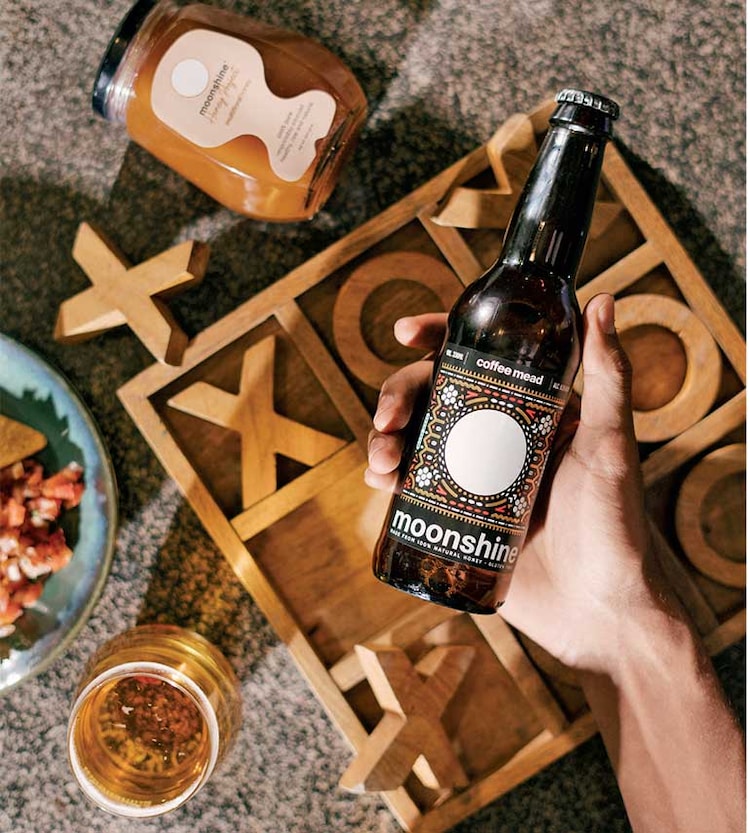
The world is in a ‘shaken and stirred’ mode, with cocktails turning heads and headlining bar menus with everyone eager to experiment. Breaking down the idea of a cocktail: a mix of spirits, often mixed with citrus and sugars, allows an examination of each part in its entirety. With increasing interest and exposure, there are growing debates about every element that makes your drink. While you can’t ignore the spirits, it’s the sugar that’s often at the centre of a long-standing parley—‘is honey any healthier than plain sugar’? Well, sugar is sugar, but who’s drinking cocktails for health anyway, right? Yet, there’s an uptick in the use of several varieties of honey in cocktails and conversations, and it’s Asia that’s setting global benchmarks. And championing this change, while spreading the gospel of honey, is the continent’s first meadery, Moonshine Meadery in Pune and bars like Bar Trigona in Kuala Lumpur, Asia Today in Bangkok, and, of course, Cobbler & Crew in Pune.
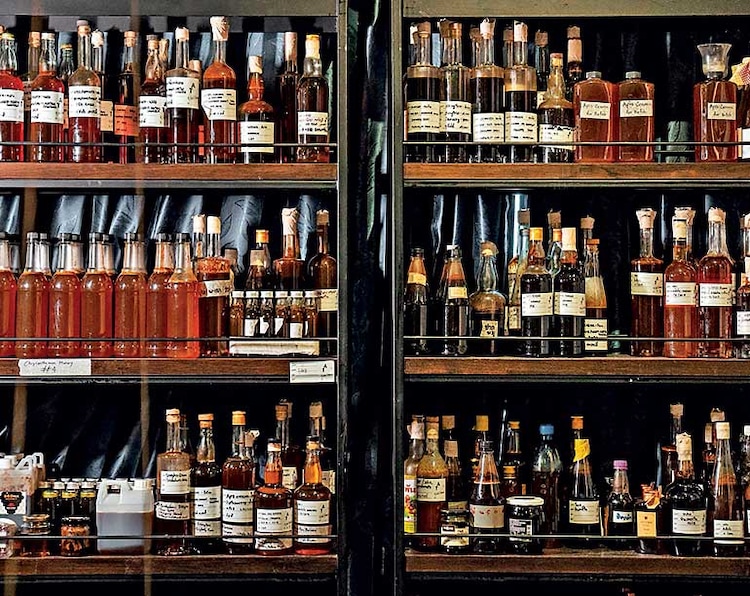
Library of honeys at Bar Asia Today
WHY HONEY?
If sugar is sugar, how can one make it better? The answer still lies with honey. Of course, there’s no biological benefit of switching to honey in cocktails, however, there’s the idea of sustainability, diversity, and community building, which barely comes at an additional cost. But cheaper isn’t always better; imagine your Old Fashioned made with Royal Stag instead of Royal Salute, or think of block ice becoming the norm instead of a cube or bullet ice which is now considered obsolete. You get the point.
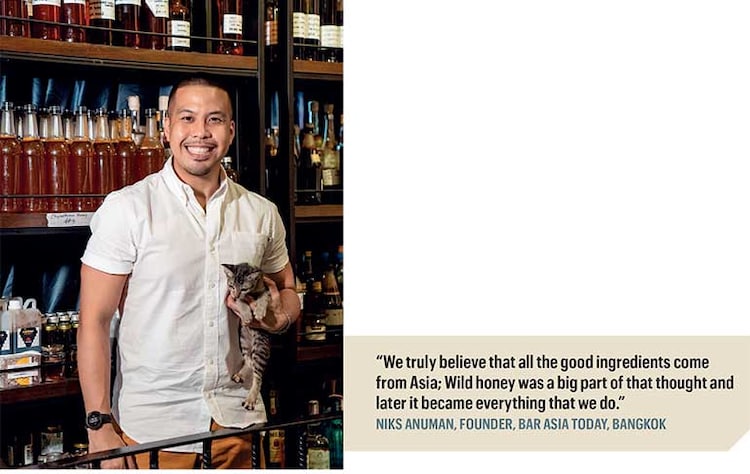
Niks Anuman founded Bar Asia Today in Bangkok eight years ago as a non-supermarket project. He says, “We truly believe that all the good ingredients come from Asia, hence Asia Today. Wild honey was a big part of that thought and later it became everything that we do”. One of India’s finest exports to Malaysia, Rohan Matmary, is the Beverage Manager at the Four Seasons Hotel in Kuala Lumpur that homes Bar Trigona. It takes pride in showcasing only natural products across all their drinks. “Bar Trigona proudly uses only Malaysian ingredients. Trigona honey was widely used in tribal homes; we teamed up with farmers and refurbished their hives, which have multiplied over the last seven years. Now we use it across the hotel, making it a popular feature again,” says Matmary.
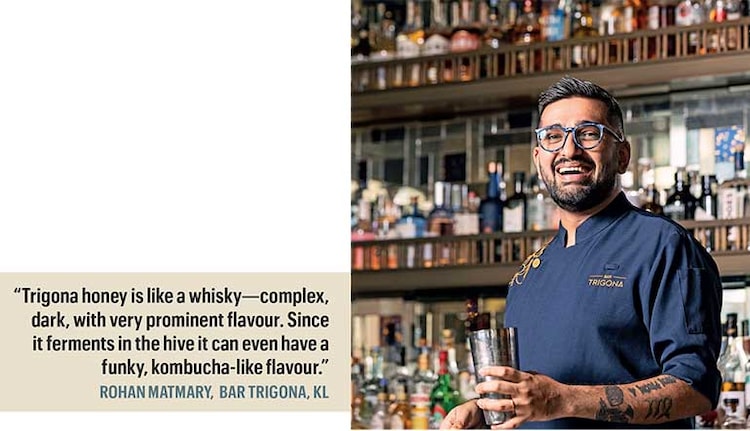
Rohan Matmary has championed Trigona honey to make it the centerpiece at Bar Trigona
WHY HONEY IS RIGHT ON THE MONEY
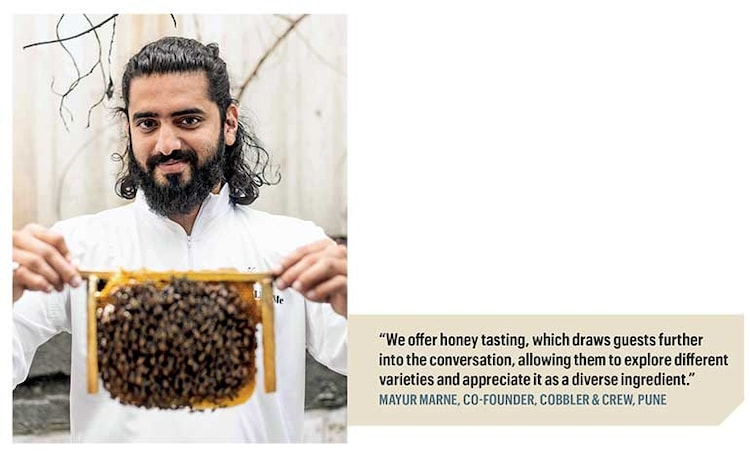
More than just an additive to sweeten cocktails, Cobbler & Crew—a bar in Pune—was the first to completely run on honey. Mayur Marne co-founded the place and claims honey’s superiority for its varied textures, sweetness levels, complexity, colour, and application, over sugars. He claims guests have never asked to replace honey with sugar in their drinks. “They’re receptive to the switch, appreciate the improved texture, and the opportunity to explore different kinds of honey. We offer honey tasting which draws the guests further in and makes them see it as a diverse ingredient”, he shares.
Cobbler & Crew, Pune, Mayur Marne of C & C, with a hive from their Bee Hotel Mayur Marne of Cobbler & Crew, Pune, with a hive from their Bee Hote
The utility of honey is a study by itself —- source of the honey, its moisture content, how it’s stored, how quickly it ferments, and lots more. The majority of our honey knowledge comes from bulk, supermarket brands. And trust me, most of what we know is incorrect. I was born allergic to honey, only to realise I’d been consuming fake bottled honey all my life. It was only after tasting pure honey, I realised I wasn’t allergic to honey but probably to the chemicals used in a majority of the big-label brands. Whatever we’ve been fed has been a result of what works for corporate giants. For instance, pure honey never crystallises; wrong, all types of honey does. It shouldn’t ferment on its own, incorrect, much like all sugars, it does spoil too. Wild hives in the park in front of your house, or in the back alley is consumable. Apparently, not. Honey doesn’t mix with water, yes it does, and that’s how all bars make honey syrup or honey water to add to cocktails. The darker the honey, the better it is; not really. You get the gist. Thus, the utility of honey, for a professional, solicits as detailed an understanding as do whiskies, agave spirits, or wines. Matmary concurs: “Different varieties of honey have different characters. Trigona honey is like a whisky—complex, dark, with very prominent flavour. Since it ferments in the hive it can even have a funky, kombucha-like flavour”. Who would have thought.
Just like various style of alcohols, decoding the styles of honey is imperative. It is as diverse an ingredient as any other. Rather than looking at honey as a loosely grouped term of nature’s favourite sugar, it should be the title of a book worth reading. For now, Nitin Vishwas, co-founder of Moonshine, Asia’s first meadery, shares the cheat-codes. “The type of honey decides the end result. Multifloral honey gives fairly neutral flavours. If you want a citrus twang, turn to Mustard honey, for caramel notes, Sidr works well, and for just a dash of sweetness, there’s Acacia. There are other types of honey too that can be complex and experiential such as the ones from the Sundarbans, Konkan belt, and Mahabaleshwar”, he explains.
What’s more, shares Matmary: “As compared to sugar, honey offers a lower Glycaemic Index (GI)—a measure of how quickly a food raises blood sugar levels compared to pure glucose—delaying your inebriation quotient, thus allowing you to hold your liquor for a longer time and hence drink more”. I’d drink to that.
ADVOCATING FOR BEES
While these bee-advocates have taken matters into their own hands and made it easier for you to participate in this bee-and-honey revolution. Here are some points to ponder: There are 350 types of bees, but only a couple of species make honey. The more urban we get, their habitat disappears. Hence, it becomes imperative to take care of them, which is why “Moonshine started the concept of ‘Bee Hotels’. We install bamboo pipes in societies with flowering plants, which allows a safe-haven for bees, allowing them to cross pollinate”, claims Vishwas. Cobbler & Crew homes a bee hotel too. “We’ve installed one in our outdoor section. It provides shelter for bees during extreme weather conditions and in exchange, engages guests to further the conversation and understanding around their habitat”, adds Marne.
Asia’s first, Moonshine Meadery, uses flavour bridges to make meads more acceptable
Bar Trigona goes a step further and actually encourages people to adopt a bee hive of their own. “We adopt a beehive, nurture and operate it for a year. Whatever is collected from that hive, we pack and store it for the guest to collect at the bar. It creates an emotional connect for them, for nurturing a living thing, and in turn, all the money goes to the farmer. We currently have 600 adopted hives, and that’s a lot!” claims Matmary.
In Bangkok, Anuman and his team bring people to the mountains, where they show them how honey is harvested. “It demonstrates to our guests how the environment and bees are in total sync. Our house project called the ‘Sanctuary Project’ provides a variety of stingless bee species (hives and boxes) to our edible flower suppliers/growers. In exchange for our bees pollinating her flowers, we get a chance to observe and learn about them at close quarters”, he shares.
Einstein once said ‘If the bee disappeared off the surface of the Earth, man would only have four years left to live’. If that’s the case, then it isn’t about cocktails, sustainability, price, a sweetener, or the texture of your cocktail. It’s about survival, doing the right thing for the environment, and for the next generation. And that’s a thought that you may want to raise a toast to.
When he was a teenager, Collin McKenna’s interest in changing the food system led him to move from Colorado to Hawaii for high school. It was on that school’s regenerative farm that the now 30-year-old entrepreneur discovered mead—the sweet, fermented honey beverage often referred to as “honey wine.” His first taste of alcohol was mead made by Hawaiian locals.
With his 10-month-old brand LIXIR—a sparkling ready-to-drink mead brand he’s billing as “hard honey”—McKenna wants to make the ancient beverage accessible while turning LIXIR into just the secondRegenerative Organic Certified (ROC) alcoholic beverage brand. “So many different cultures made different variations of it. But we wanted to reimagine mead for a modern consumer,” McKenna says.
Making Mead Accessible
One of McKenna’s first moves when starting LIXIR was trademarking the term “hard honey,” papering over the knowledge gap around mead—one of the world’s oldest alcoholic beverages, but whose popularity fell as beer and wine became easier to produce on industrial scale. But mead has been having a resurgence. Fortune Business Insights data reveals that the mead market was about $533.3 million in 2023, and is projected to nearly triple by 2032.
“There’s a lot of education behind trying to explain mead and where it comes from,” McKenna says. “As soon as we came up with the idea of hard honey, people were like, ‘I get it.’”
With a concept in mind, in 2021, McKenna approached Frank Golbeck, founder of Oceanside, California’s Golden Coast Mead, to begin developing the formula for his hard honey. Since 2010, Golbeck has been focused on modern mead with a regenerative approach. He saw McKenna’s ethos and vision, and although his small factory had limited space, was willing to begin a partnership.
Golbeck says mead represents “the synthesis of ecology, creativity and history coming together. Honey is this expensive product that is hard to make. Then to turn it into an alcohol that is similarly hard to make—and to do it well, consistently—has escaped people for generations.”
The pair ultimately created a proprietary process for formulating a 5% ABV modern mead that’s less sweet and, unlike the traditional drink, slightly carbonated. LIXIR comes in three varieties: Pear Lime, Cherry Grapefruit, and Mango Orange. “There are so many different honey options—flowers and places where they forage—and they can make such different mead,” McKenna says. “We went through countless renditions of just trying to make the base. It was at least a yearlong process.”
Since April, LIXIR has debuted at Total Wine & More in its SoCal region as well as Jimbo’s natural grocery stores in San Diego, among several other small retailers and upscale restaurants and hotels. This Spring, it will also begin rolling out in Mother’s Market stores in Southern California regions. McKenna has raised more than $650,000 in funding, about half of its current goal amid a crowdfunding round. Jack Sinclair, CEO of Sprouts Farmers Market, is an advisor and investor in LIXIR.
LIXIR’s branding helps make mead something a casual shopper might buy, but McKenna still has to solve for how to explain to buyers that their purchase is funding responsible farming. A survey out of Purdue University’s Department of Agriculture found that more than 70% of U.S. consumers are slightly or not at all familiar with the term “regenerative agriculture.”
McKenna and Golbeck knew that their regenerative goals would rely on sourcing, so they decided to make LIXIR with honey sourced from a Brazilian farm in the Atlantic Rainforest that pulls double duty as a nature and bee preserve. McKenna says LIXIR is already a regenerative organic product, but has yet to receive certification from the Regenerative Organic Alliance—something no bee farm or honey brand has managed to achieve.
McKenna and Golbeck say that’s because the ROA requires a three-mile forage radius to certify farms, something the founders view as impractical because bees fly far and wide. They have been working with groups like the Regenerative Apiculture Working Group, which focuses on promoting a regenerative honey ecosystem, to make changes to the requirements. “It’s so complicated,” McKenna says. “We’ve been chipping away for 10 years.”
Though the ROA has certified a handful of beverage brands—among them Harmless Harvest coconut water and Guayaki yerba mate—LIXIR would become just the second alcoholic beverage brand with ROC status (outdoor lifestyle brand Patagonia’s beer and wine operation has received the certification). McKenna is hopeful ROC status could come within the next five years. “We want to educate people in the best way possible by creating a product that everybody can enjoy and have fun with,” McKenna says. “We want to be the brand behind the movement.”