Showing posts with label environment. Show all posts

Thursday, 25 September 2025

USA: Thistlerock Mead Company Aims for Sustainability with Net-Zero Mead Initiative

From finance.coin-turk.com

Overview

  • Thistlerock Mead Company pushes sustainable practices with net-zero goals.

  • Industries beyond beverages join the environmental mission for broader impact.

  • The global coalition aims to protect pollinators through diverse strategies.

 During the quiet days of the Covid-19 pandemic, John Kluge, an entrepreneur based in Virginia, realized the growing disconnection between people and the natural environment. His observations during these isolated months led him to establish the Thistlerock Mead Company. The company‘s mission is to not only craft honey wine but also promote sustainable practices across the beverage industry. By using regenerative agriculture and sustainable beekeeping, Thistlerock aims to be the first net-zero meadery in the United States. The company integrates solar electricity and utilizes 100 percent post-consumer recycled bottles.

In past discussions, Kluge has consistently highlighted the potential within the beverage industry to address broader issues like biodiversity. Thistlerock’s current initiative is a testament to this vision as it seeks to inspire environmental responsibility industry-wide. Previously, Kluge’s efforts were more localized but now aim to influence broader industry practices. Thistlerock plans to work with various sectors, expanding partnerships beyond beverage companies to include industries like fashion and technology, demonstrating the extensive reach of environmental responsibility.

What Are Thistlerock’s New Collaborative Efforts?

In collaboration with Bee:Wild and the advocacy group Global Citizen, Thistlerock is forging a coalition aimed at encouraging pollinator-friendly practices. This coalition strives to galvanize support for protecting rainforest areas and securing funding for conservation. Kluge stated,

“We are little—we can’t do this by ourselves,”

when discussing these new partnerships. The initiative underlines an urgent need given that honeybee colonies are expected to decline significantly according to studies, mainly due to environmental stressors and human activities.

How Are Other Industries Engaging?

Industries beyond the beverage sector are joining Thistlerock’s environmental mission. Companies from fashion to technology are participating, each contributing in unique ways to boost pollinator protection. For instance, Dubai Airport plans to communicate biodiversity messages to millions of travellers, highlighting the global reach and diverse nature of the campaign efforts. According to Eva Kruse, “They come to it from different sides,” indicating the multifaceted strategies participants bring to the campaign.

The Bee:Wild coalition encompasses a diverse range of strategies geared toward enhancing pollinator conservation and biodiversity. From signing petitions advocating pollinator rights to working with communities on urban rewilding projects, the collaborative effort includes innovative approaches to raise awareness. Kluge expressed,

“The hope is that progress builds progress, and we will inspire each other,”

indicating the initiative’s potential to continuously foster environmental consciousness.

John Kluge’s initiative encourages individuals and industries to think about daily dependencies on pollination. Beverages, food, and countless other items rely heavily on bees and similar pollinators. Such interdependence underscores the need for awareness and proactive measures to safeguard these essential creatures.

The commitment to sustainability evident in Thistlerock’s efforts mirrors a wider trend in industries toward environmental responsibility. By uniting companies under a common cause, the initiative not only focuses on immediate ecological concerns but also seeks long-term solutions beneficial to industries and ecosystems alike. As threats to pollinator populations like bees grow, efforts such as these are vital in combating biodiversity loss and promoting global ecological health.

https://finance.coin-turk.com/thistlerock-mead-company-aims-for-sustainability-with-net-zero-mead-initiative/

Friday, 11 August 2023

Mead has a long history and a future as a sustainable beer alternative

From washingtonpost.com

When Brett and Megan Hines moved to Colorado for graduate school in 2011, they immersed themselves in the New Age subcultures that were taking root in the state at the time. The Eastern Shore Maryland natives took up mountain biking, joined a CSA, volunteered at an organic farm, raised chickens, drank craft beer and eventually joined a home-brewing club, called Liquid Poets, to learn how to make their own. Brett even parlayed the hobby into jobs brewing for local labels. 

But the deeper the Hineses delved into the world of ales and lagers, the more they realised that the industry was out of sync with their emerging environmentalist worldview.

“We wanted to go with our values of sourcing as much local product as we could,” says Megan Hines. “We wanted to make a truly local beverage. And a lot of grain is grown far away at a big commercial scale. Bringing grain in from across the country is not a sustainable long-term thing.”


During their time with the Liquid Poets, the Hinses learned of a different fermentable, one that was made without grain. Mead was essentially honey and water, flavoured with fruits and spices from perennial plants. And they found it every bit as delicious and versatile as beer.

In 2014, the Hinses moved back to Maryland to set up their own organic vegetable farm. They bought sheep, goats, pigs, chickens and bees to raise and planted an apple orchard. But instead of brewing beer, the couple made mead. Six years later, they opened The Buzz Meadery in Berlin, Md.


Mead has ancient roots, predating human agriculture, with origins at least as far back as the New Stone Age. Over the past decade-plus, the beverage has found a foothold in the ongoing craft beverage movement — a recent report from Technavio research group projected mead to be a $2.26 billion global market by 2026. And while Europe, steeped in the mead-making tradition, still holds the largest chunk of that market, the U.S. is closing fast. The American Mead Makers Association (AMMA) reports that the number of domestic meaderies blossomed from just 60 in 2003 to 450 in 2020 — with some 200 more somewhere in the planning stages of opening before the pandemic hit.

Megan and Brett Hines opened The Buzz Meadery in 2020 as a more environmentally sustainable alternative to brewing beer. (Brendan McCabe/for The Washington Post)


Mead’s modern resurgence can be linked to several factors, from appealing to gluten-free drinkers to an association with mainstream fantasy fiction like “Game of Thrones” to sheer novelty. Long-standing industry leaders such as Michigan’s B. Nektar (founded in 2006) and Colorado’s Redstone Meadery (2001) have turned their niche followings into well-known national brands. But whatever the reason for its current popularity, the ancient drink might owe its future to the fact that, in many ways, it’s better for the Earth than beer.


“Mead is perhaps headed to be the drink that, if it’s made as it can be and stays in its own environment, can be the lowest carbon-footprint beverage there is,” says Ken Schramm, owner of the renowned Michigan-based Schramm’s Mead, who has been making the stuff for 35 years and wrote 2003’s “The Compleat Meadmaker,” still considered the authoritative manual for the craft. “If you drink it where you’re at, the whole thing ends up being a very carbon-positive product.”


Proximity is a key differentiator for mead when it comes to carbon footprint. The primary ingredients in beer are barley and hops, the production of which are both mainly concentrated in the western and northwestern regions of the U.S. According to the Hop Growers of America, Washington state produces more than twice the amount of hops than does the rest of the country; and the USDA says that most domestic barley production — three-fourths of which is used for malting — is in Idaho, Montana and North Dakota.


Meanwhile, honey can be produced virtually anywhere, with North Dakota apiaries churning out about 31 million pounds, followed by a far-flung array of regions, including California (11.5 million pounds), Texas (8.32 million), Montana (7.5 million), Florida (7.35 million), South Dakota (7.2 million) and Minnesota (5.2 million). As Schramm points out, many leading meadmakers still import exotic types of honey from all over the world, but usually in much smaller quantities than are grains used to brew beer at commercial scale.


Saving on shipping might give mead a small leg up over beer (after all, honey is much heavier to move than an equal amount grain). But mead’s true viability advantage could lie below the topsoil. Barley, along with other adjuncts in beer, such as corn, rice and wheat, is an annual crop. That means every year, farmers plow and plant, releasing CO2 and carbon into the atmosphere. Those commercial crops often require use of potentially harmful herbicides and pesticides. Perhaps most important: In times of drought, these fields require irrigation.

The fruits generally used in making mead, on the other hand, grow from perennial trees and vines. And the honey?


“You don’t have to irrigate plants that rely on bees,” says Ayla Guild, beekeeper and co-owner of The Hive Taproom meadery, in East Troy, Wis. “During drought, bees are scrappy. They figure it out. Certain plants thrive in drought, and the bees know how to find them.”


Speaking of bees, meadmaking also has the carbon-positive impact of promoting the planet’s most prodigious pollinators, which keep carbon-eating forests and carbon-sequestering prairies healthy. Plus, there’s no strain on the insects’ supply. “Bees make surplus honey,” says Amina Harris, founding director of the Honey and Pollination Center at the University of California at Davis and “Queen Bee” of her family business, Z Specialty Food, LLC. “They’re going to make it whether they need it or not.”

A selection of The Buzz Meadery's meads and ciders, made with locally grown apples and local Maryland honey. (Brendan McCabe/for The Washington Post)

When it comes to actual production, mead requires far less water than beer. While beer wort - the liquid from the mashing process - is boiled, most mead is not. Between water lost in the boil, water used to cool the wort, and water used for cleaning equipment, a brewery could need eight gallons of water to brew one gallon of beer — and that doesn’t include the water-intensive steeping process of malting the grain. Breweries also have bigger physical and energy footprints – they usually require more space and more power than meaderies do.


Of course, part of mead’s overall environmental virtue is the fact that it is still a boutique business and a very tiny wedge of the larger alcohol industry (craft beer’s current U.S. market is nearly $30 billion). And maybe there’s a future in which mead mostly remains hyperlocal or at least regional, with Marylanders patronizing The Buzz, Pacific Northwesterners buying equally sustainability-minded Sky River, and tipplers of the Tri-state area drinking Melovino.


But if mead is to continue to grow as an industry, what’s to stop it from taking on some of the unsustainable traits of beer? Schramm says that the key is meadmakers like the Hineses continuing to capitalize on the inherent advantages of the craft and following a different business model from that of craft beer — that of its closer kin, wine.


“Beer is the ocean liner; we are the rowboat,” says Schramm. “We do have the potential. There’s a notion of having meaderies emulate the great wineries, having the beehives, berry farm and orchard all in one place. Then you can have something that is biodiverse and very environmentally conscious. Alcohol has done tremendous things for our culture. Now it’s time to have it do things for the environment.”


At Buzz, which this summer will release its first cans of carbonated session mead made with Maryland honey, Megan Hines says the calculus is simple: “I think everyone should be hyperlocal and lower environmental impact. Just support your local people.”


https://www.washingtonpost.com/food/2023/08/10/mead-sustainability-beer-alternative/

Saturday, 10 July 2021

SolarCraft Completes Solar Power Installation at Heidrun Meadery, California

From pr.com

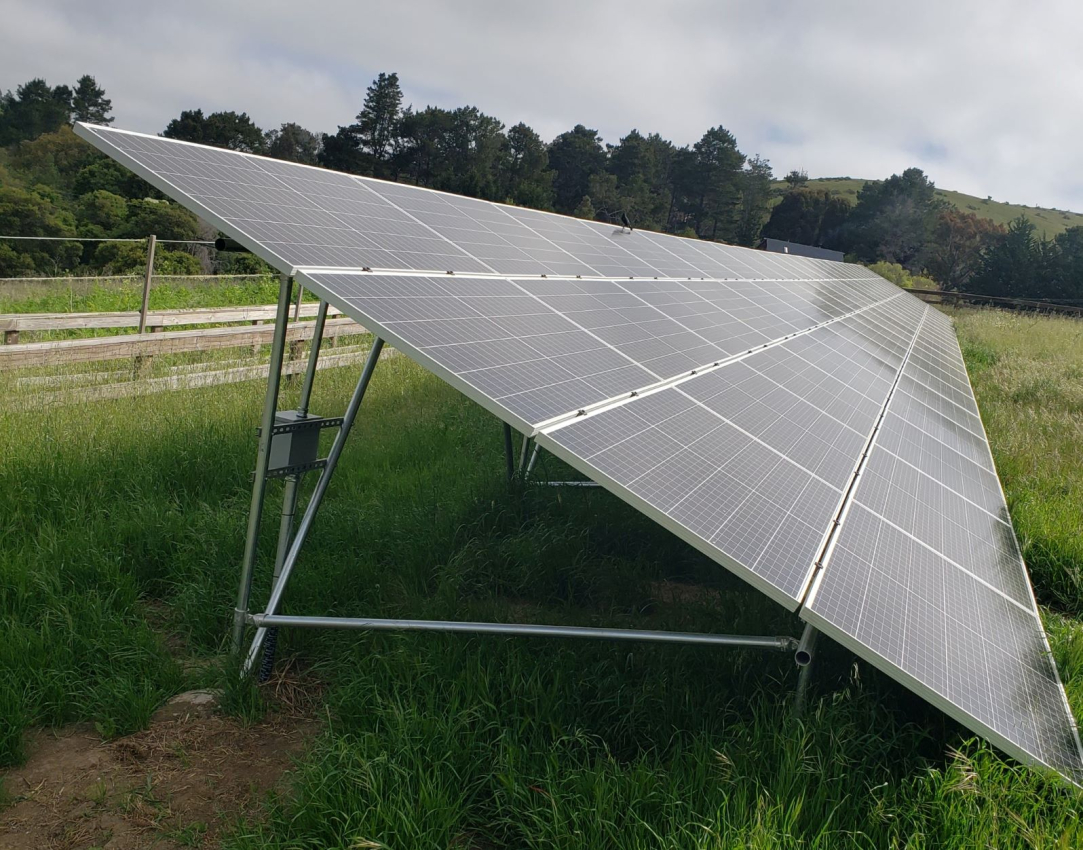
Novato and Sonoma based SolarCraft, recently completed the installation of a 33.4 kW solar power installation at Heidrun Meadery in Point Reyes Station, CA. Harnessing the power of the sun, the West Marin winery has increased the sustainability of their operations while cutting their operating costs by over $11,000 annually.

SolarCraft Completes Solar Power Installation at Heidrun Meadery - West Marin Sparkling Mead Winery Harvests the Sun

Novato, CA, July 09, 2021 --(PR.com)-- The solar photovoltaic system is ground mounted in a field north of the Winery residence. Comprised of (88) high-efficiency 380 watt solar panels, the solar array will produce over 46,000 kWh of clean, renewable power every year. This will offset 100% of Heidrun Meadery’s electrical needs, allowing their operations to run completely on solar power.

Along with world-class meadmaking, Heidrun has a beekeeping operation and a bee forage cultivation program, on which their honey wine depends. Their commitment to sustainability not only benefits the environment around them, but the community as whole.

“As with our efforts to create a biodiverse bee forage farmscape to provide habitat for pollinators and other critters in the wild, going 100% solar is in keeping with the meadery's mission to develop a company that has a net beneficial impact on the environment,” said Heidrun owner Gordon Hull. “This solar array is a thrilling accomplishment for us!”

The new solar electric system will offset over 32 metric tons of carbon dioxide every year that would otherwise be emitted by fossil-fuel based utility power. This impact is equivalent to saving 76 barrels of oil, removing air pollution produced by over 82,000 miles of driving, or the pollutants removed by planting 40 acres of trees annually.

About SolarCraft
SolarCraft continues to provide clean energy and battery storage solutions throughout the North Bay while following strict health and safety protocols to protect employees, clients, and the community during the Coronavirus pandemic. SolarCraft is 100% Employee-Owned and has been one of the largest green-tech employers based in the North Bay for over 35 years. SolarCraft delivers Clean Energy Solutions for homes and businesses including Solar Energy and Battery Energy Storage. With over 8,500 customers, our team of dedicated employee-owners is proud to have installed more clean energy systems than any other company in the North Bay. www.solarcraft.com.

About Heidrun Meadery
In 1995 Gordon Hull, a geologist-turned-brewer, tried his hand at making sparkling wines from honey. What began as a casual experiment led to a singular fascination with the remarkable variability of flower nectar and, subsequently, to the formation of Heidrun Meadery. Heiðrun is producing a mead that is unlike an other: a sparkling mead produced in the French Méthode Champenoise tradition. The winery includes a commercial beekeeping operation, experimentation in the cultivation of bee-friendly, high-yield nectar crops and an extraordinary travel destination for worldly enthusiasts of wine, nature and conviviality.

Wednesday, 15 July 2020

The Brightside: Creating a buzz about environmentalism through mead

From wmdt.com

BERLIN, Md. – Opening up a business can be a scary venture, especially during a global pandemic… but a man named Brett Hines is determined to make a difference with his new establishment called The Buzz Meadery.

Mead, also known as honey wine, is the oldest existing form of alcohol.

Hines said, “Beer is made with grain, wine is made with grapes, mead is made with honey… and that’s the way I like to think about it.”

Not only is mead a historic and delicious drink, it’s also environmentally friendly.

Hines said, “I really like making mead because I’m able to actually source the supply chain, the entire supply chain myself from our local community.”
Hines works with local farmers and a local apiary to brew up the beverage, helping both the honeybee population and the local agriculture industry to thrive.

“Through keeping our supply chain local, not only do we support local farmers, we empower our community by keeping more dollars in our communities, but we also reduce our carbon footprint,” Hines said.

Hines also sells his mead in reusable bottles, which people can bring back to get a discount off their next order.
“Then we’re not having to buy new you know bottles or cans all the time,” Hines explained.

So not only is Brett producing delicious mead, he’s also brewing up conversations about environmentalism in Berlin.

Hines said, “Everybody can relax around a glass of mead, and that’s how I felt the most approachable way was to have this conversation was through that.”

So whether he’s crafting the perfect drink for his customers, inspiring others to pursue their goals, or pouring out his feelings about environmentalism, you can always find Hines creating a buzz about mead in his community.
Hines works closely with his wife to make this all possible. She is also into environmentalism.

If you’re interested in buying a bottle from Brett and his wife, you can find them at the Ocean Pines Farmers Market on Saturday, and at the Berlin Farmers Market on Sunday.

You can also find them at their taphouse located at 9040 Worcester Highway, Unit D in Berlin. Their taphouse is open Thursday through Sunday 1 p.m. through 6 p.m.
You can find The Buzz Meadery on Facebook by clicking here.

https://www.wmdt.com/2020/07/the-brightside-creating-a-buzz-about-environmentalism-through-mead/