Showing posts with label Canada. Show all posts

Friday, 22 May 2026

Alberta, Canada: Why You Need Mead

From edifyedmonton.com

Your next big pour is 7,000 years old. But a local meadery is bringing a modern twist to the ancient sip

We’re familiar with fermented grapes in wine, but what about fermented honey? Few people realize that this drink exists, let alone that our province thrives in its production of high-quality honey.

Mead, known in ancient times as golden nectar, was a drink deemed worthy of gods and kings. Interesting fact: this drink predates beer and wine. Pottery containers dating to 7000 B.C.E in China show evidence of the fermentation of honey-based alcoholic beverages, a similar process to what we use now.

Fermentation is nature’s culinary wizardry, a perfect combination of science and art. The technicalities behind it are not lost on Curtis Foreman, who studied molecular biology. It was that and his father’s winemaking background that inspired him to own a meadery.

The Grey Owl Meadery was established in 2015 by the Schwengler family before Foreman and his family took over in 2023. The business remains a family affair through and through.

                                                                                                        courtesy Grey Owl Meadery

Even though mead was once held in high regard, its production declined in the 1600s as honey became more expensive to make. But within the past decade, it has made a comeback (we can probably thank Game of Thrones for that). And meaderies like Foreman’s are helping bring it to everyone’s table. “I want people to know that this drink is not just for the shelf,” Foreman says.

Though it’s crafted from honey, do not assume this drink is strictly for those with a sweet tooth. There is a mead for every palate, and Foreman cannot reiterate this enough.

Grey Owl has experimented with modern recipes, offering sparkling, cysers (a combination of mead and apple cider) and fortified meads. But the meadery’s still wines are the most popular, especially the Cranberry Orange — a cranberry, clover and wildflower honey mix, infused with Turkish oranges. If you are not sure what flavour is right for you, visit the meadery near Buck Lake, about two hours’ drive southwest of Edmonton, for a free tasting.

From taking in the view of the foothills and mountains to savouring the substantial charcuterie board, Grey Owl’s Tasting Room offers more than drinks. “We want the atmosphere to feel like a nice winery in Tuscany,” Foreman says. If mead is not your thing, bring someone who would partake in every sip and you can relax with a gourmet coffee — the scenery itself will make the experience worth it.


                                                                           courtesy Grey Owl Meadery


Grey Owl mead is also available at liquor stores across Alberta.

Grey Owl Meadery
452036 Hwy 22, Alder Flats, AB | 403.890.9834 | greyowlmeadery.com


https://edifyedmonton.com/food/drinks/why-you-need-mead/

Friday, 1 May 2026

'We're both pretty excited': Vancouver meadery opens new tasting room

From vancouverisawesome.com

'It's been a long time for us to find a place that worked.' 

The guys behind Humblebee are eager to welcome folks to their new place.

"We're both pretty excited. I feel like it's been a long time for us to find a place that worked," says Pierre Vacheresse, who co-founded Humblebee with Jeff Gillham.

The new Humblebee space has experience as a tasting room. They're moving into 1830 Powell St. That was the home of Slow Hand Beer Company before they moved to Threefold just a couple of blocks away.

Slow Hand has actually "been super helpful" getting Humblebee set up in their new space, Vacheresse says.

The new tasting room will take advantage of the wood panelling of the space to create a cosy vibe, he adds, with the goal of making a space that feels like a familiar, friendly basement to hang out in.

"We're super excited to bring in something we're proud of and really captures what we want to put out there," says Vacheresse.

He notes the space is ideal for drinks at the end of the work week or for the weekend, with flights and glasses on the menu.

                                                          Vancouver's new mead tasting room is at 1830 Powell St.

It's mead but brewed more like beer, founders say

On tap will be Humblebee's meads (which are brewed as braggots), like The Bee's Knees or Monkberry Moon Delight. They're bringing back one of their signature brews right now, too. Champion of the Sun, which includes orange and saffron, is coming, but only temporarily due to the war in Iran.

"This will probably be the last batch of it for a little while," Vacheresse says. "The price of saffron has skyrocketed."

Slow Hand beer is also on tap. Snacks are available, and a food program will follow later this spring or summer.

The tasting room will also operate as a retail location for anyone seeking cans of Humblebee.

Humblebee's mead is brewed as a braggot, which isn't like the typical honey wines people might think of.

"What Jeff and I decided to do is brew it more like a beer," says Vacheresse.

They keep the alcohol levels low (five per cent), use ale yeast, and integrate a gluten-free beer (all their drinks are gluten-free). 

The grand opening for Humblebee is April 30 at 4 p.m. The tasting room is located at 1830 Powell St. near Victoria Drive.

It's open Thursdays and Fridays from 4 to 10 p.m. and Saturdays and Sundays from 2 to 10 p.m.

https://www.vancouverisawesome.com/food-and-drink/vancouver-mead-open-new-tasting-room-12219702

Saturday, 3 May 2025

Canada: Prairie Bee Meadery preserving history with honey

From discovermoosejaw.com

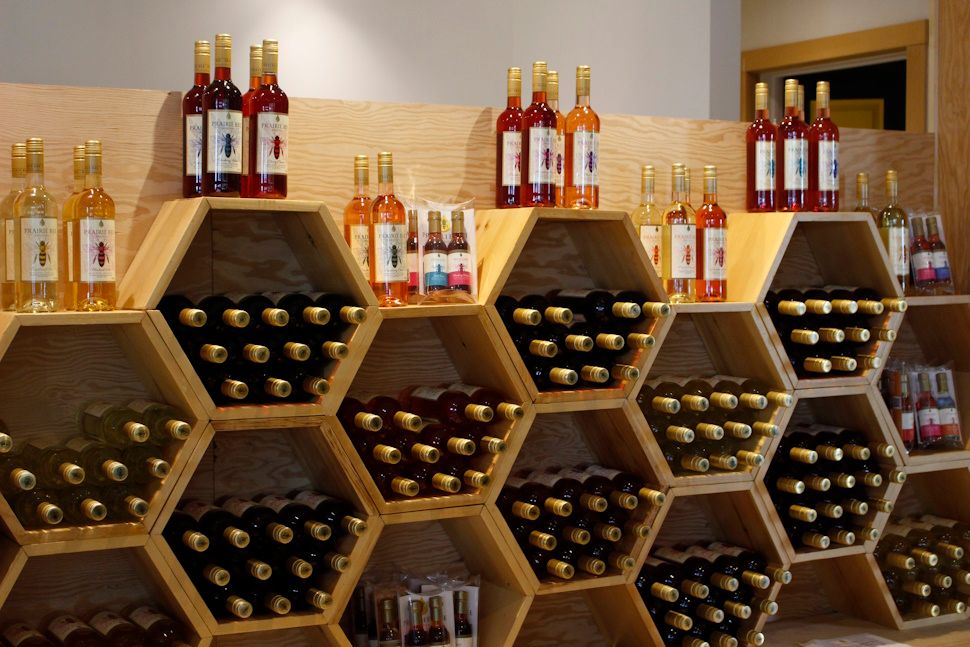
Prairie Bee Meadery is Saskatchewan’s premier craft meadery, known for their award-winning honey wines, also known as mead – a traditional beverage made from fermenting honey that goes back centuries.

Prairie Bee Meadery began back in 2012 with their parent company, Grandpa’s Garden, a u-pick farm, growing fruits like sour cherries, strawberries, raspberries, haskap berries, and melons, as well as a selection of market garden vegetables.

With all the fruit growing on the property, Grandpa’s Garden naturally turned to beekeeping to promote better pollination, and soon they had honey to harvest – and lots of it!

“At the beginning, we had about four dozen hives. We’re down to around two dozen at the moment, but it’s still a lot of honey” said Prairie Bee Meadery Owner and Mead Maker Crystal Milburn. “Obviously, the primary ingredient in all meads in honey; mead at its base is fermented honey. So, we turned to making mead, and here we are today selling it across the province.”

gfgf

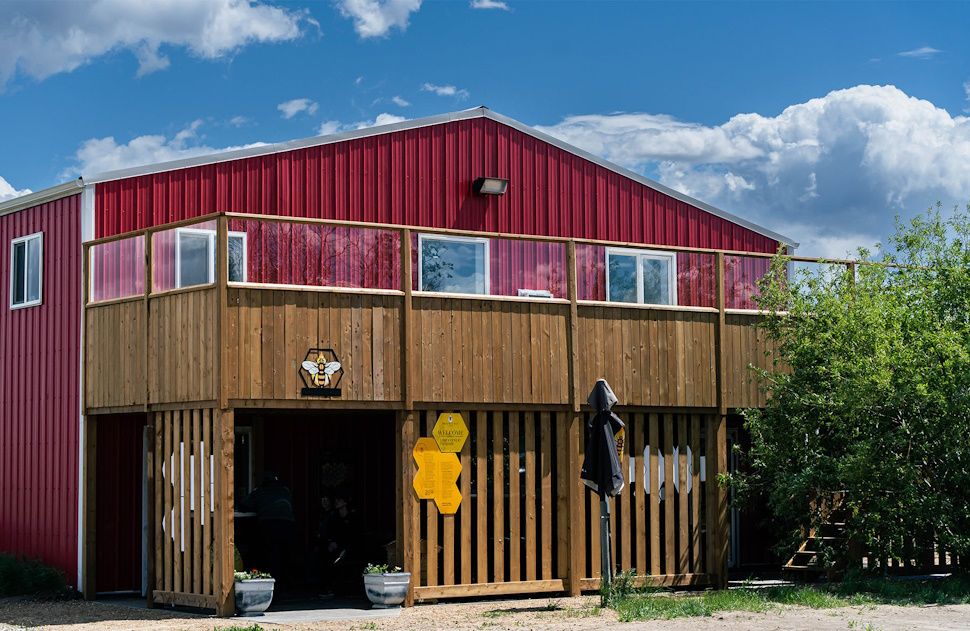
Prairie Bee Meadery is located on a farm just 20 minutes west of Moose Jaw and all manufacturing is done on site.

“We start with the honey, of course. Our honey frames actually get sent to another apiary to be extracted, then come back to us, skimmed and barrelled and ready to use. Our barrels contain about 650lbs of honey each, and a rough rule of thumb is that one barrel makes about 1,000L of mead,” Milburn explained.

She continued, “The two main ingredients are honey and water, then of course the yeast that does the work of eating the sugars in the honey and transforming it into alcohol. We start by blending the honey and water (or fruit juices), then it’s just waiting for it to ferment. Then we have several refining, clarification, and filtering steps, making sure it’s clean. Finally, it goes into the bottle.”

Prairie Bee Meadery products are available for purchase across Saskatchewan, but if you want the full hive-to-bottle experience, the Meadery is open for tours from May, around Mother’s Day, to October every year. Book guided tours online, or drop in anytime and take a self-guided tour with the Prairie Bee Meadery smartphone app.

dsds

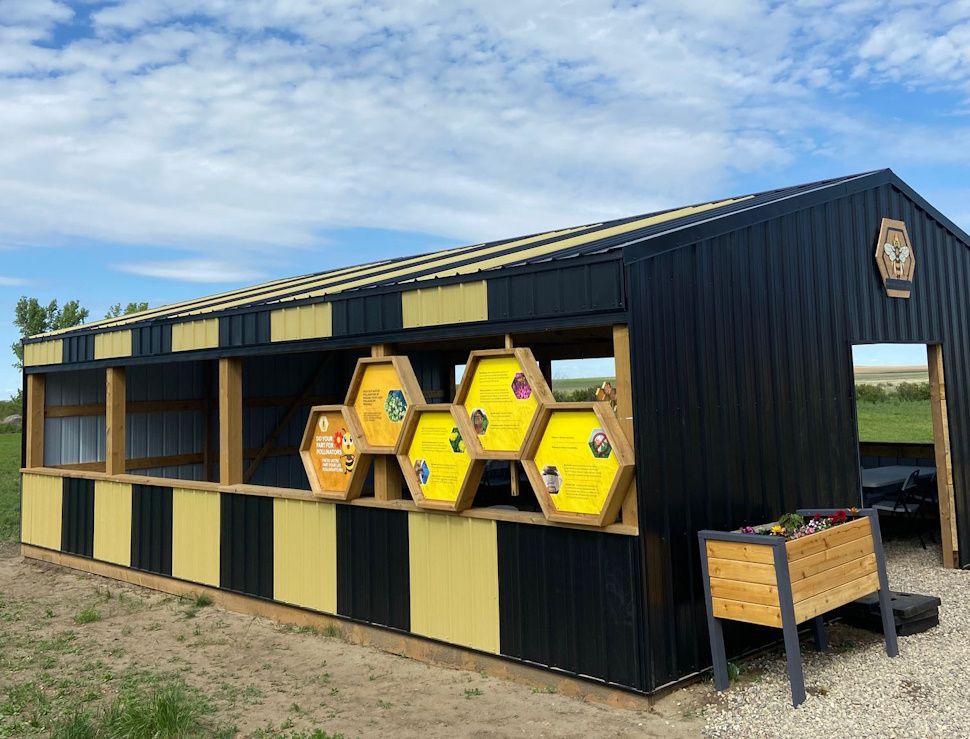
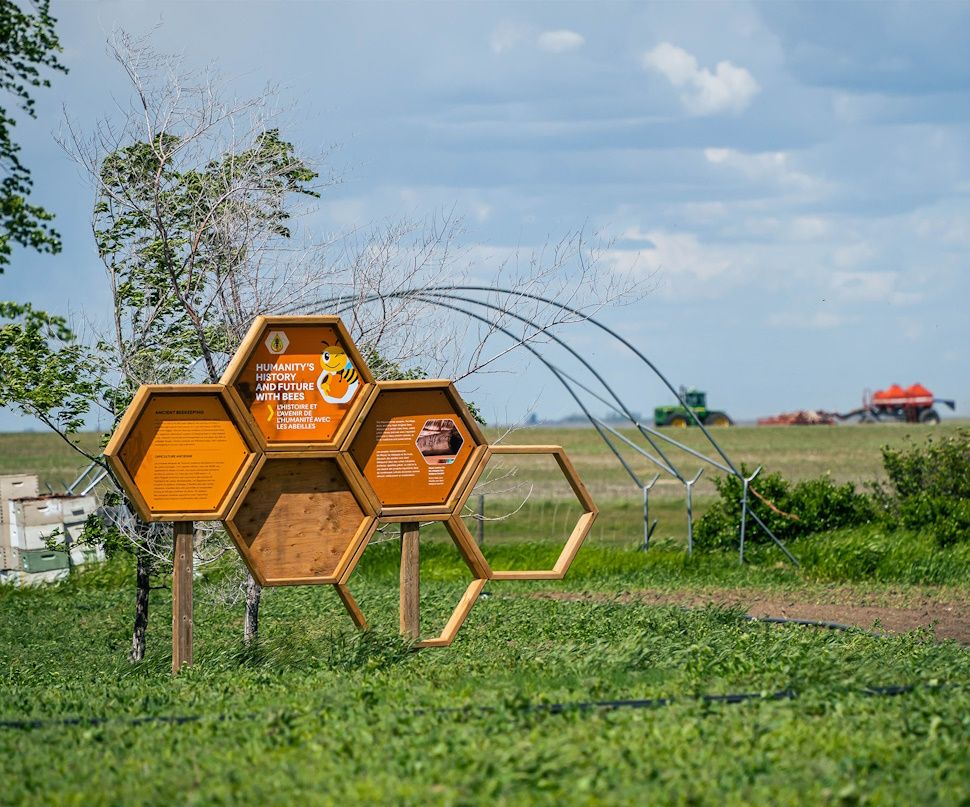
“We currently offer two different tours to introduce people to the world of mead,” said Milburn. “We have our Pollinator Pathway tour, which is all about bees, humanity’s relationship with pollinators and what our history is with bees, and what the future [might] hold as well.”

“Our second tour is called the Honey Wine Highway which is about the history of mead. The process of turning honey into alcohol and where that originated, the history of it and how it’s become what it is now, and the kind of Renaissance that mead is experiencing today since humanity is harvesting more honey today than ever before in our history.”

The app-based tour, available through the Prairie Bee Meadery app, allows you to listen to a recorded tour as you walk through the Meadery and the meadow. The virtual Pollinated Pathway tour also includes an interactive game, prompting small quizzes based on the signage posted along the pathways. The Meadery has its own Wi-Fi network as well, so you don’t have to use your data to access the virtual tour.

dsds

In addition to the tours, Prairie Bee Meadery hosts special crafting events and demonstrations throughout the summer.

“We’re going to do a couple weekends where we’ll have honey harvesting demonstrations,” said Milburn. “We have a small extractor, and we’d love for people to come out and see what it’s like to pull a frame out of the hive, get it uncapped, and spin the honey off and get a taste of honey fresh from the hive.”

If you’re in the Moose Jaw area, Milburn encourages you to come visit, book your Bachelor/Bachelorette parties, and bring any guests who may be staying with you from out of town.

“It’s always nice to find something unique and special [to do] that’s right here in your own backyard,” she said. “Our motto here is, ‘Try something different,’ because our products are unlike anything else you’re going to find in the province, and it’s just a really unique Saskatchewan experience.”

sdsd

Prairie Bee Meadery is also a Harvest Host RV and Terego partner, so if you’re network members driving through in an RV or camper, you’re welcome to park at the Meadery for a night and enjoy a peaceful sleep.

Head over to the Prairie Bee Meadery farm this summer! Event dates, tours, and directions can be found on their website, as well as in the Tourism Moose Jaw guide.

https://discovermoosejaw.com/articles/prairie-bee-meadery-preserving-history-with-honey

Friday, 13 December 2024

Winnipeg: Plenty of buzz

From winnipegfreepress.com

Brat Cat celebrates one year of fun, fizzy and refreshing session meads 

With just one year of commercial production in the books, Brat Cat Mead Co.’s dry, carbonated and fruit-infused modern meads have garnered a hive of local followers in Winnipeg.

“I wasn’t expecting it to take off so fast, but it’s new, it’s shiny,” says 34-year-old Steph Barten from the tap room of Devil May Care Brewing Co., the brewery where she makes her mead.

“There are other meaderies or mead in the city, but not like this.”

Barten began homebrewing in 2016 as a hobby, making wine and then beer before trying her hand at mead.

“I hadn’t tried making mead before — I tried it and liked the process of it. Taking care of it and learning the science behind how to balance everything is fun.”

It was during the pandemic, when Barten couldn’t go into her office job, that she began expanding her basement mead production.

“Once I started working from home, my basement basically turned into a little nano-meadery. I was using different types of honey, different types of yeast, working at different temperatures with different flavours. I had about eight, 10 fermenters, carboys, going at the same time. What else are you going to do when you’re stuck inside?” she says.

Among the types of locally sourced honey Barten tried were sunflower, clover, canola and wildflower, each of which brings its own flavour profile.

“Honestly, I think canola makes the best session mead. Even after fermentation, you still get that nice honeyed note, those floral notes without any musty or grassy notes,” she says.

With her passion for homebrewing, Barten had been looking for a job in the beer industry. That chance came in 2022, as Colin Koop and Steve Gauthier began working on opening Devil May Care Brewing Co. at 155 Fort St. The pair had already been contract brewing their beers at other local breweries and had decided to open their own bricks-and-mortar facility.

“I knew Colin and Steve through the industry — they said, ‘Hey, I know you’re looking for a production job, would you be interested?’ Obviously I jumped at that,” she says.

After six months of construction at the Fort Street location, Barten began brewing beer for Devil May Care, where she continues to quarterback the bulk of the brewery’s production today.

But Barten still had mead on her mind.

“The entire time, they knew and I knew I was trying to open up a meadery — I thought it would be kind of fun to have a brewery and a meadery in the same spot,” she says.

MIKAELA MACKENZIE / FREE PRESS                  ‘I wasn’t expecting it to take off so fast, but it’s new, it’s shiny,’ Steph Barten says of Brat Cat Mead Co., which she produces at the Devil May Care Brewing Co. facility.

Enter Brat Cat, which celebrated its first anniversary in November at a daylong event that saw Barten offering a half-dozen small-batch flavoured meads alongside her five infused core products — Raspspspberry (raspberry), Catittude (philly sour), Zoom Operator (lemon and green tea), Good Omen (blackberry) and the most popular offering, La Uña de Gato (prickly pear).

Brat Cat’s latest release is Someone’s Feral Aunt, a cranberry-infused session mead that’s available on tap at Devil May Care and will have a wider release in cans once Barten gets the labels, which have been delayed by the postal strike.

Offering a drink made in-house that isn’t beer has been beneficial for both Devil May Care and Brat Cat.

“It’s something different to have on tap for people who can’t drink beer, or don’t like beer, or want to try something different — it keeps people in the seats. It’s also gluten friendly, which is kind of nice — it’s a bit more inclusive,” says Barten.

“Taking care of it and learning the science behind how to balance everything is fun.”–Steph Barten

Misconceptions about session meads are quickly put to bed once curious imbibers try the stuff.

“Mead is traditionally quite sweet, super strong. This is the complete opposite of it. Most people, once they try it, they’re like, ‘Oh, this is nice, it’s refreshing.’ They’re a little surprised,” says Barten.

Using real fruit purées in Brat Cat’s core session meads has proven to bring its own challenges.

“I only use real fruit, and different fruits will taste and look different depending on the season — especially prickly pear. If it’s out of season, you have to add more fruit to adjust the flavour and the colour. And, you know, raspberries don’t always taste nice,” Barten says.

MIKAELA MACKENZIE / FREE PRESS            Brat Cat Mead Co. features Raspspspberry (raspberry), Zoom Operator (lemon and green tea), La Uña de Gato (prickly pear), Good Omen (blackberry) and Catittude (philly sour).

Making a traditionally niche beverage such as mead in a consumer-friendly style and learning about adjusting to seasonal variation are just two of many challenges Barten has faced since making beer and mead full-time — including the pains of bureaucratic red tape, and being a woman in a traditionally male-dominated industry.

“It’s a very real thing — I’ve gotten a lot of ‘no’s,” she says.

But Barten has been able to reach out for support and advice from fellow producers such as Marcus Wiebe from Winkler’s Dead Horse Cider Co., who Barten says has been “a wealth of knowledge.”

And local establishments have offered support as well — Park Alleys in South Osborne, Smith at Inn at the Forks, Kilter Brewing Co. in St. Boniface, the Yellow Dog Tavern on Donald Street and The Common at The Forks Market all offer or have offered Brat Cat meads.

One year in, interest in Brat Cat continues to grow — particularly once people taste Barten’s offerings.

“It’s something new and exciting, and it’s local, and a Métis woman-owned business,” she says. “Friends and family have helped and volunteered a lot to help me get where I am, but otherwise I’m basically a one-woman show here.”

https://www.winnipegfreepress.com/arts-and-life/2024/12/12/plenty-of-buzz

Monday, 16 September 2024

British Columbia: The science and art of making mead at Vernon's Planet Bee

From infotel.ca

Mead has been gaining in popularity as an alcoholic beverage but also as a craft and career. Planet Bee in Vernon is a case in point.

James Nowek, co-owner of Planet Bee honey farm, makes mead right on the premises from honey harvested from hives on the farm.

Mead is a fermented honey-based wine, consisting of honey, water and yeast as the most basic three ingredients. Over time, the yeast eats the sugars in the honey turning the water into mead and then its ready for drinking.

There aren't a lot of wineries in the North Okanagan compared to the Central and Southern parts of the valley, so that's left some room for producers of mead.

Nowek took up full time mead making at the farm in 2018 and has had a passion for it ever since.

“To be able to taste your product at the end is a pretty nice way to reward yourself when you have something that’s successful and works well,” Nowek said.

                                                    James and Alexandra Nowek at Plant Bee in Vernon raise a glass of their product.
                                                                            Image Credit: SUBMITTED/Planet Bee


When he started mead making, Nowek thought more diversity in mead flavours was needed to cater to more people, so he started experimenting.

“In terms of sweetness, it could be anywhere from super dry to insanely sweet. It can be anywhere for four or five per cent of alcohol to 17 per cent. You can add spices, fruits, age it in barrels, it’s really wide open,” Nowek said. “No matter what somebody’s preference is for a drink, there’s probably mead out there.”

The longer the fermentation process, the more alcohol content the batch of mead will contain.

A typical batch of mead at Planet Bee takes about a month of primary fermentation followed by the secondary fermentation for another three to four weeks. The batch will then go through a one-month period of fining, which is clarifying, filtering and bottling the wine.

Mead with higher percentages of alcohol, like Planet Bee’s Ode to Odin at 17 per cent, go through a more extensive time process with an additional month tacked on to the secondary fermentation process. Ode to Odin can take four or five months to create then it's aged in a whisky barrel for six months.

                                                         Image Credit: SUBMITTED/Planet Bee

Good yeast is a vital component in mead making as it starts the fermentation process.

“You don’t want the yeast to starve, but you also don’t want to flood them and overfeed them. A lot of fermenters used to just give all the nutrients right away up front and then just watch it kind of peter out as it went on and then found out it's a much healthier, cleaner ferment if you just add little bits at a time,” Nowek said.

He said if you've had mead before and it wasn't to your taste, throw that expectation out the window.

“Every meadery you go to is going to be totally different,” he said. “Even if you didn’t like all of our meads here, please still try a mead at another meadery, because you’ll probably find one you like somewhere.”

Altering a pre-conceived notion of mead for visitors on the farm is always an exciting opportunity for Nowek. Planet Bee offers free samples of their mead creations to visitors so they can take a sip and experience the unique taste and learn what type of mead they may or may not enjoy.

Nowek said a lot of people expect mead to be extremely sweet due to the honey but are often surprised by the flavours and how dry the mead can be.

The classic and most popular mead sold on the farm is a traditional dry mead. Dubbed Okanagan Delight it has a light, crisp, clean and slightly sour taste.

Nowek is also working on Norse, Egyptian and a Greek themed-mead which will be coming out soon. All of these meads hold different flavour profiles. The Egyptian has a sweet and strong in taste.

Cherry, blackberry and black current meads are also a fan favourite at Planet Bee and popular choices among visitors.

Nowek looks at mead making as a passion project and a science project simultaneously. The creativity needed, as well as the formulas, can create the perfect batch of house made mead.

“And that’s the true art to it," he said.

https://infotel.ca/inwine/the-science-and-art-of-making-mead-at-vernons-planet-bee/it106487 

Saturday, 15 June 2024

Canada: Prairie Bee Meadery unveils new tourist attractions

From moosejawtoday.com

Pollinator Pathway and Honey Highway highlight the mead-making process 

MOOSE JAW — New tourist attractions, the Pollinator Pathway and the Honey Highway, were unveiled by Prairie Bee Meadery Winery June 7.

The meadery is located 20 kilometres west of Moose Jaw, Saskatchewan.

The Pollinator Pathway explores and explains the important relationship between humanity and their honey-producing partners. The Honey Highway explains the history and the process of making mead.

"We had a whole bunch of folks from Tourism Sask come out and sort of 'beta test' our new experiences, and they had a great time," said Crystal Milburn, co-owner of Prairie Bee Meadery.

"We genuinely hope that everyone else has a great time, too."

Darby Fiddler, Crystal Milburn and Gerard Milburn cut the ribbon to officially open the new tourist attractions. 

Visitors are invited to sip and savour food and mead options, enjoy a self-guided or guided tour, visit the crafting pavilion or enhance their visit with an app-based audio tour and treasure hunt games.

The winery crafts local premium honey into internationally award-winning wine. Prairie Bee Meadery started as a branch of Grandpa’s Garden U-pick and officially opened in 2016. Since then, the Saskatchewan community has embraced their products that can be found at farmers markets, more than100 liquor retailers in multiple provinces and at the Prairie Bee retail store located in the Grant Hall Hotel in Moose Jaw.

"Prairie Bee Meadery is such an anchor in our downtown core of Moose Jaw. It is an amazing destination and has been for a few years," stated Crystal Froese, city councillor.

"It is one of the most unique experiences, I believe, we have in the province of Saskatchewan."

To learn more about Prairie Bee Meadery https://prairiebeemeadery.ca/

https://www.moosejawtoday.com/local-news/prairie-bee-meadery-unveils-new-tourist-attractions-9081028

Monday, 8 April 2024

Canada: A New Brunswick beverage 10 years in the making, just in time for the eclipse

From msn.com

When John Way started brewing back in 2014, he set aside some of his first batch of mead for a special occasion. 

At the time, he didn't know what that would be. 

Over the next three years his business continued to grow, making mead with the help of family and hundreds of thousands of bees. 

"If you ferment grapes, you get wine," said Way. "Ferment grain, you get beer. Ferment apples, you get cider. If you ferment honey, you get mead." 

As Sunset Heights Meadery and Apiary grew, just outside of Fredericton, that batch of mead waited.

Way says he's sold tickets to an event Monday where he'll share his mead, named, aptly, Totality. (Shane Fowler/CBC News)© Provided by cbc.ca

When 2017 rolled around "and there's the eclipse south of us, and we were like, 'Wow, I wonder when the next eclipse is that's going to hit Fredericton?'" said Way. 

After a quick online search he knew exactly why he was aging his mead. 

"Are you kidding me? Seven years from now? Which will be exactly 10 years from when we started this mead? It all just came together," he said. "It was just like it was meant to be."

Way started immediately preparing for when he'd crack open his aging beverage. But at the time no one he knew was anticipating an eclipse, and no one was taking him seriously. 

The Facebook event he created seven years in advance didn't get a lot of attention. 

"Mostly disbelief," said Way. "Most people were like, 'Yeah, right.'" 

Friends joked with him at the time that they had plans on April 8, 2024, and could he move it a day.

Undeterred, he set out to make something "epic." 

He went about "solera aging" that mead, a term that actually has nothing to do with the sun or the eclipse.

Instead, it's a labour-intensive process of fractionally blending that original mead together with mead from more recent seasons to increase flavour complexity and taste.

Once completed, the mead sat undisturbed for five years until Way moved it into four wooden barrels he imported from Scotland. That's where the aging process finishes, much like whiskey. 

John Way showcases the eclipse glasses he's giving customers that double as a ticket to a second event for the next eclipse passing over Fredericton — in 2079. (Shane Fowler/CBC News)© Provided by cbc.ca

Now as the special day has arrived, Way is having the last laugh. 

"It's a great mix of trepidation and excitement," said Way. "I'm not afraid for the product, the product is amazing, I've tasted it. [It] makes your brain do these frizzly things, it's so complicated." 

He's sold tickets to an event Monday where he'll share his mead, named, aptly, Totality, among friends, family and mead lovers with live music — all under a darkened sky.

"We're actually giving them two tickets, because we're giving them a ticket to the next eclipse too," said Way. "So, you just have to wait until 2079 and we're going to do it again." 

"There is a caveat," said Way. "I have to be alive to host it." 

https://www.msn.com/en-ca/news/canada/a-new-brunswick-beverage-10-years-in-the-making-just-in-time-for-the-eclipse/ar-BB1lcRUP 

Monday, 6 June 2022

Canada: New meadery opens in Alberta hamlet

From globalnews.ca

It was an exciting weekend in New Sarepta — a hamlet about 50 kilometres south of Edmonton. After years of work and delays because of COVID-19, Old Station Honey & Mead was finally able to have its grand opening.

It’s a dream come true for 61-year-old Will Munsey.

This dream all began 15 years ago when Munsey moved his family from Hong Kong to the Alberta hamlet. He decided to buy a berry farm and it grew from there. First, he got bees, then one day, Munsey’s friend gave him some mead that he had made from Munsey’s honey.

Munsey was hooked and thought maybe he should try to make mead himself.

“The very first mead I made was excellent and I thought it was going to be easy,” he said. “I spent the next four years trying to make a mead that good.”

Munsey’s said his golden ticket was when he was able to lease the Old Fire Station in New Sarepta. He got to work to change it from an empty garage to a functioning meadery.

It’s not just about making and selling mead, for Munsey, it’s also about bringing life back to the small community.

“Putting this here and trying to build it into something that people around the city of Edmonton and metropolitan area know and come to support, and bring people back to the community, I think it’s a great thing for this little community.

“All rural communities should have something.”

Many people travelled from the neighbouring community for the grand opening, including Ross and Sheila Lusk. After seeing a post on Facebook, they decided to make this their Sunday drive destination.

“I think it is very special because it’s local, it’s close, it’s a short drive and it’s something different,” Sheila said.

Sheldon Andres and Brynn Martin came from Leduc.

“I like seeing how such a small community and having this big idea, comes together,” Martin said.

“When you think of distilleries, you think of something big, something very upscale, but this one is very small, very local, very well built and well-grounded,” Andres said.

Munsey said his family has played a huge role in helping him. He said the community of New Sarepta has also been very encouraging.

“I show up here after a blizzard and my driveway has been ploughed by somebody, I asked for rhubarb for a mead and there’s rhubarb at the door,” Munsey said.

Munsey added that he has plans to grow.

“We want to be a place where people can spend an hour or two, have a glass of mead, have something to eat, maybe have some ice cream and venture off into non-alcoholic sodas made from honey and the berries,” he said.

https://globalnews.ca/news/8898670/new-meadery-opens-in-alberta-hamlet/ 

Sunday, 8 May 2022

Mead – More Than Just The Drink of Vikings

From panow.com

Mead (/mi:d/) is an alcoholic beverage made by fermenting honey mixed with water, and sometimes with added ingredients such as fruits, spices, grains, or hops. The alcoholic content ranges from about 3.5% ABV to more than 18%. The defining characteristic of mead is that the majority of the beverage’s fermentable sugar is derived from honey. It may be still, carbonated, or naturally sparkling; dry, semi-sweet, or sweet. – Wikipedia

(Western Canada)Often associated with Viking feast halls, mead is a class of alcoholic beverage that has seen a resurgence in recent years. But the origins of mead go back much further than men in boats with funny helmets. In fact, it is believed that mead may be the oldest form of alcoholic beverage in the world, with evidence that mead was being made in ancient China as long as 9000 years ago. (Sorry beer drinkers).

Through history, mead played an important role in many cultures. The Greeks considered mead to be the ‘Nectar of the Gods’, and as such it was believed to give the drinker divine blessings such as strength, wit, and even immortality. In Viking mythology, there was a legendary drink called the Mead of Poetry that was said to make the imbiber into a scholar or poet, as it was made from the blood of a divine keeper of knowledge. And though your doctor will never give you a prescription for it, some herbal meads were used as medicine for depression, digestion and hypochondria.

Recently, mead is once again starting to gain popularity among craft producers. There are roughly 300 commercial mead producers across North America, and that doesn’t count the back yard and basement mead producers. A quick search online will yield dozens of quick, easy, 10 to 15 step processes to make your own mead at home and feel like a Viking…. just try not to sail across the ocean and plunder England.


Now that we are done with the history lesson, lets talk about mead itself. As mentioned above, the defining characteristic of mead is that it gets it’s sugar from honey as opposed to grapes – the main difference between mead and wine, even though mead is often referred to as honey wine.

The flavour of mead varies greatly based on the source of the honey. Most traditional meads use light, clear honeys made from nectar from clover or orange blossom. However, any honey can be used to make mead, and darker honeys often lend themselves well to spiced or mulled meads.

One of the fastest growing mead producers in Western Canada is Fallen Timber Meadery, located in Cremona, Alberta just over an hour north west of Calgary. The Ryan family started producing honey in the Alberta foothills over 50 years ago, and in 2010 they diversified into producing mead on the farm. The honey they produce is an extremely high grade clover honey that gives their meads a light, clear finish.

Looking more locally, Prairie Bee Meadery from just outside of Moose Jaw is Saskatchewan’s oldest commercial meadery, and has won more than 30 awards both locally and internationally. Boasting a line-up of 12 traditional and dessert meads and recently launching a new line of canned sparkling meads, Prairie Bee was featured on the CityTV series Flat Out Food last March, adding to their exposure.

https://panow.com/2022/05/06/mead-more-than-just-the-drink-of-vikings/ 

Thursday, 5 May 2022

New meadery in British Columbia plans to make honey wine with help from local bees

From infotel.ca

A new meadery is in development in Kamloops, British Columbia, and while a few meaderies can be found in the Okanagan, this will be the first of its kind in the Tournament Capital.

The facility is located on a property on the banks of the South Thompson River, but it will be some time before the flavourful honey wine will be flowing.

“We recently received zoning permission so can finally get started, although there are many more steps to take,” co-owner Bernita Wienhold-Leahy said.

Wienhold-Leahy and her soon-to-be husband and business partner, Leroy Harder, have successfully made small batches of honey wine using honey from their own bees, and fruit from their own property. With the encouragement of close friends and fans of their product, the couple is going bigger with a plan to produce a minimum of 4,500 litres per year. 

“Honey wine is a type of mead, which is the oldest alcoholic drink on the planet,” Wienhold-Leahy said. “We make ours with fermented fruit and honey which is called melomel. The ingredients are fruit, yeast, honey and water. It tastes like a fruit wine with the added honey taste on top of it.”

Harder is an entomologist and experienced beekeeper. Some beekeepers use insecticides to rid their bees of mites but Harder is working to keep his hives insecticide-free for a cleaner end product.

“Leroy is a biologist so he is trying to find ways of managing things differently and naturally,” Wienhold-Leahy said. “He loves science. He raises his own queens and is waiting for the right weather to start building up his hives.”

A bee colony in Kamloops owned by resident Leroy Harder.

A bee colony in Kamloops owned by resident Leroy Harder.
Image Credit: SUBMITTED/ Bernita Wienhold-Leahy

The couple will need 50 hives to make enough honey to meet annual demand. The hives they currently manage are placed in various areas surrounding Kamloops, with the bees flavouring the honey with the natural vegetation around them.

Last year, the couple planted a variety of different fruit trees and are growing berries, all to be used as locally sourced ingredients.

“We’ll be supplying apricots and cherries, as well as blueberries, blackberries and strawberries,” Wienhold-Leahy said. “Strawberries provide a delicious subtle flavour to a honey wine.”

The couple is turning their three garages into a meadery, complete with all the necessary equipment for fermenting, mixing and bottling. They need stainless steel tanks and corking equipment.

Somewhere in the future they will likely add a tasting room.

“It takes a lot to start up and we are not in any rush,” Wienhold-Leahy said. “We have to go through a lot of health regulations and red tape. We are just going to putter and build with a plan to be in full production in two years. We have been advised by other winery owners a tasting room is a must.”

To build on their knowledge and expertise in the art of making honey wine, the couple has been visiting other meaderies in the province.

“There are two meaderies on the Lower Mainland,” Wienhold-Leahy said. “We visited them last week. While their models and products are not the exact same as ours, it is a fun way to learn and share knowledge about mead.”

The new business is called Lion’s Head Meadery, named after a rock formation behind the couple’s property.

Wienhold-Leahy said the meadery will serve the local area as a small, tasteful winery.

“As much as 4,500 litres per year sounds like a lot, it is still a pretty small production,” she said. “We are looking forward to bringing our product to local farmers markets and events in the future.”

https://infotel.ca/inwine/new-kamloops-meadery-plans-to-make-honey-wine-with-help-from-local-bees/it90471


Monday, 13 September 2021

Pollen their weight: How the guys behind Royal Canadian Mead are doing their part to help out our struggling pollinators — and beautifying Toronto’s patios in the process

From thestar.com

“With 85 per cent of all of the flowering plants out there and one-third of our food needing pollinators, they are one of the most vital ecosystem services out there,” says Pollinator Partnership Canada director Vicki Wojcik.

Benjamin Leszcz and Mike Mills left their jobs at communications companies to get into natural cider, which then lead them to another intriguing beverage: mead. “We were vaguely aware of mead, but hadn’t previously realized that it’s both the world’s oldest alcoholic beverage, and the greenest,” Leszcz says. “We asked: Why isn’t anyone talking about the world’s most sustainable alcohol?”

To get the conversation going, they started Royal Canadian Mead (RCM). “Mead is super-sustainable,” Leszcz says, “because its base — honey — doesn’t require an agricultural footprint in the way that barley or grapes might, for beer and wine.” This explains how archeologists have discovered that mead predates those beverages. “It’s based on an insect byproduct, not an agricultural product,” Leszcz adds.

What’s more is that mead is the only alcoholic beverage that could be considered regenerative. “Every can of RCM contributes to the pollination of 185,000 wildflowers,” Leszcz says. “When you support the economy of bees, you support the economy of nature — an economy we all know is in need of major stimulus.”

Benjamin Leszcz and Mike Mills left their jobs at communications companies and started Royal Canadian Mead.

The pair wanted to do even more for our buzzy, beleaguered little friends, so they paired with Pollinator Partnership Canada to set up the Patio Pollinator program, working with Jaime McCuaig of Gunnar and the Toronto Flower Market to install bee boxes on restaurant and bar patios and fill them with pollinator-friendly plants like coreopsis, milkweed, agastache, lantana, dill flower, bronze fennel, yarrow, sage and marigold, plus textural elements like grasses, trailing mint leaf and nasturtium.

“Flowers make the city feel alive,” Toronto Flower Market founder Natasa Kajganic says. “They change the cityscape — our sidewalks, our store fronts, our patios. Everything.”

They’re also crucial to our pollinator pals, according to Pollinator Partnership Canada director Vicki Wojcik. “With 85 per cent of all of the flowering plants out there and one-third of our food needing pollinators, they are one of the most vital ecosystem services out there,” she says. “Our lives would be very different if pollinators disappeared. Our landscapes would look different and our diets would be corn, wheat, and rice: no fruits.”

Over the course of the summer, the boxes have grown wild, beautifying the Fresh City on Bay, the Dock Ellis, Imperial Pub, The Ballroom, Sakai Bar, Grape Crush, Venice Beach Bar and Peter Pan Bistro.

The biggest challenge facing pollinators is loss of habitat, so, according to Leszcz, installing these gardens actually does move the dial. “A quick visit to any of them affirms that,” he says. “They are totally alive with pollinators of all kinds, from bees to butterflies — even some hummingbirds! My friend was enjoying a can of Garden Party on the patio at Venice Beach Bar on Dundas West when a monarch butterfly landed on his shoulder. It sat there for a good 15 minutes, kind of like a parrot on a pirate’s shoulder. After a quick visit back to the pollinator garden, the butterfly came right back to my friend, and perched on his knee. It was a small but memorable moment of delight.”

The program runs into October, but, even as it winds down, sustainability is key. “We are repurposing every aspect of the project, “Leszcz says, “bringing the bee boxes, soil and perennials out to our property in Prince Edward County, where we’re building a production facility and tasting room. There, the bee boxes will house beehives to support Royal Canadian Mead’s production. “It was really nice to participate in a project with longevity,” McCuaig says of the Patio Pollinator program. “It’s nice to be able to see the components of this project contributing to ecosystems far beyond this season.”

Royal Canadian Mead has been talking to potential partners in other cities as well. “We’ll be thrilled for this to happen,” Leszcz says. “The more pollinator gardens there are, the better off our urban ecosystems are, so we would encourage — nay, beg! — other companies to install pollinator gardens of their own. If another company that is connected to nature is reading this, we would say: Please, steal our idea! We all win if you do.”

https://www.thestar.com/life/together/people/2021/09/12/pollen-their-weight-how-the-guys-behind-royal-canadian-mead-are-doing-their-part-to-help-out-our-struggling-pollinators-and-beautifying-torontos-patios-in-the-process.html